Skip collecting and comparing quotes for the new water heater.
A gas water heater in Alaska usually lasts 8 to 12 years. The tank itself is what gives out. Years of heating and cooling cause the metal to fatigue and the glass lining inside to crack, and once it starts leaking there's no fixing it.
Most homes here run on gas, so you're likely dealing with a pilot light and a gas line, not just a power cord. That matters when it's time to replace one. The new unit has to vent properly, the gas line has to be sized right, and the work has to meet code for how it was done.
Power here costs more than almost anywhere else in the country, which is part of why so many homes stick with gas for water heating in the first place. If yours is electric, the running cost is worth factoring in when you're pricing out a replacement.
If your water heater is already past 8 years, or you're seeing rust-colored water, a tank that rumbles, or water pooling at the base, it's worth having someone look at it before it fails on its own schedule instead of yours.
When it's time to replace it, finding someone to do the work is its own chore. You'd normally be searching for contractors who handle gas water heaters, calling a few, explaining the same symptoms over and over, then waiting on quotes to compare line by line. This page skips that. You tell it what's going on once, and it goes to a licensed contractor local to Alaska, someone who installs these year-round and knows how the gas and venting work in homes here. Just the one contractor, not a handful of companies calling you back at once.
From there, the button below is what moves things forward.
How long does a water heater last in Alaska?
Your water heater has been running for years without a problem, and now you're wondering if it's getting close to time to replace it, or if something you noticed means it's already on its way out. Most people never think about this until the tank starts acting up or someone mentions how old it is.
Plan on 8 to 12 years, less if it's never been flushed
That range holds for gas water heaters in most homes, and Alaska doesn't change the math much either way. What shortens it is sediment. Minerals settle at the bottom of the tank over time, and that layer makes the burner work harder to heat the same water, which wears the tank from the inside faster than age alone would. A water heater that's been flushed every year or two tends to land at the higher end of that range. One that's never been touched since installation often doesn't make it past 8 years. If yours came with the house, the install date on the tank's label is the only way to know where it stands.
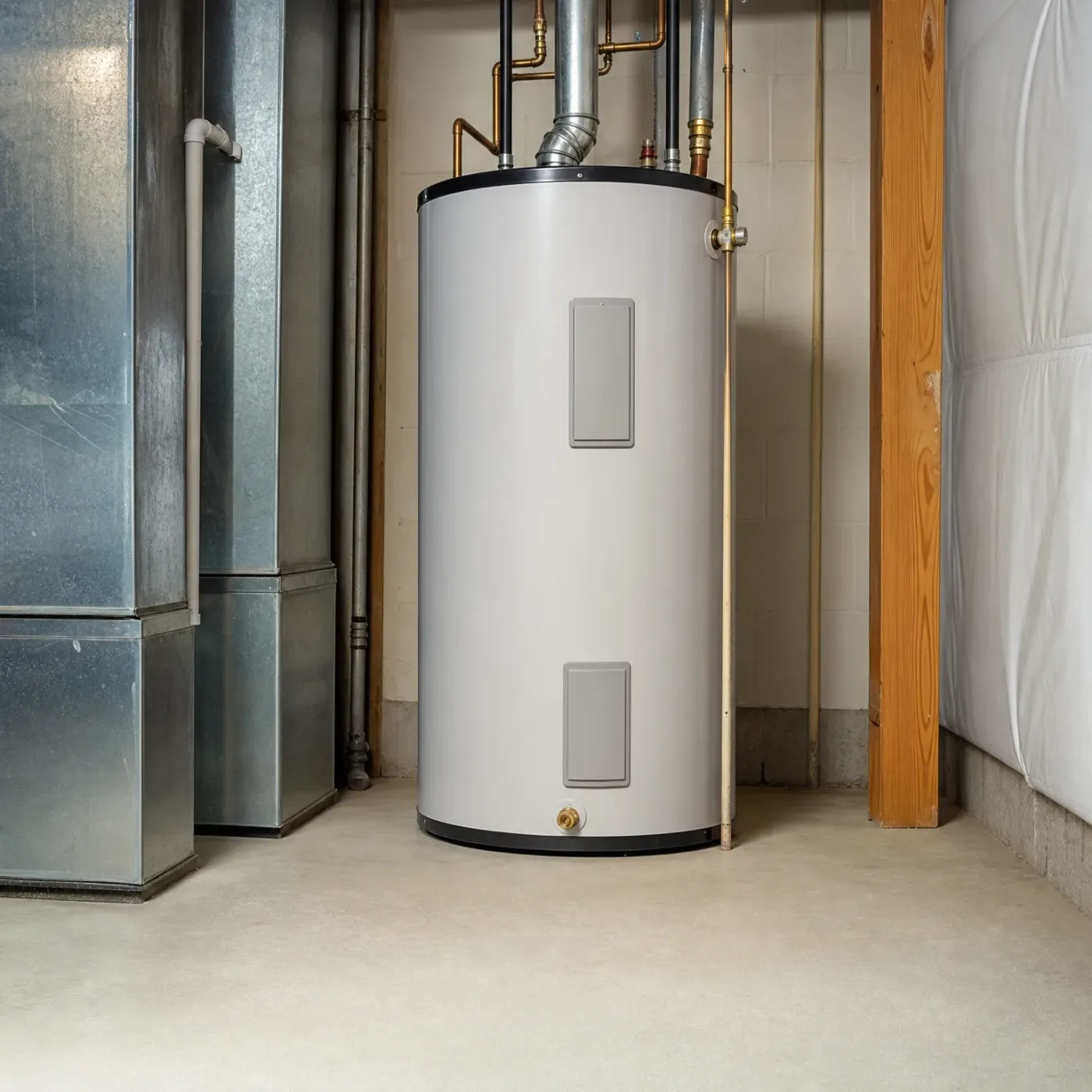
Working as it should
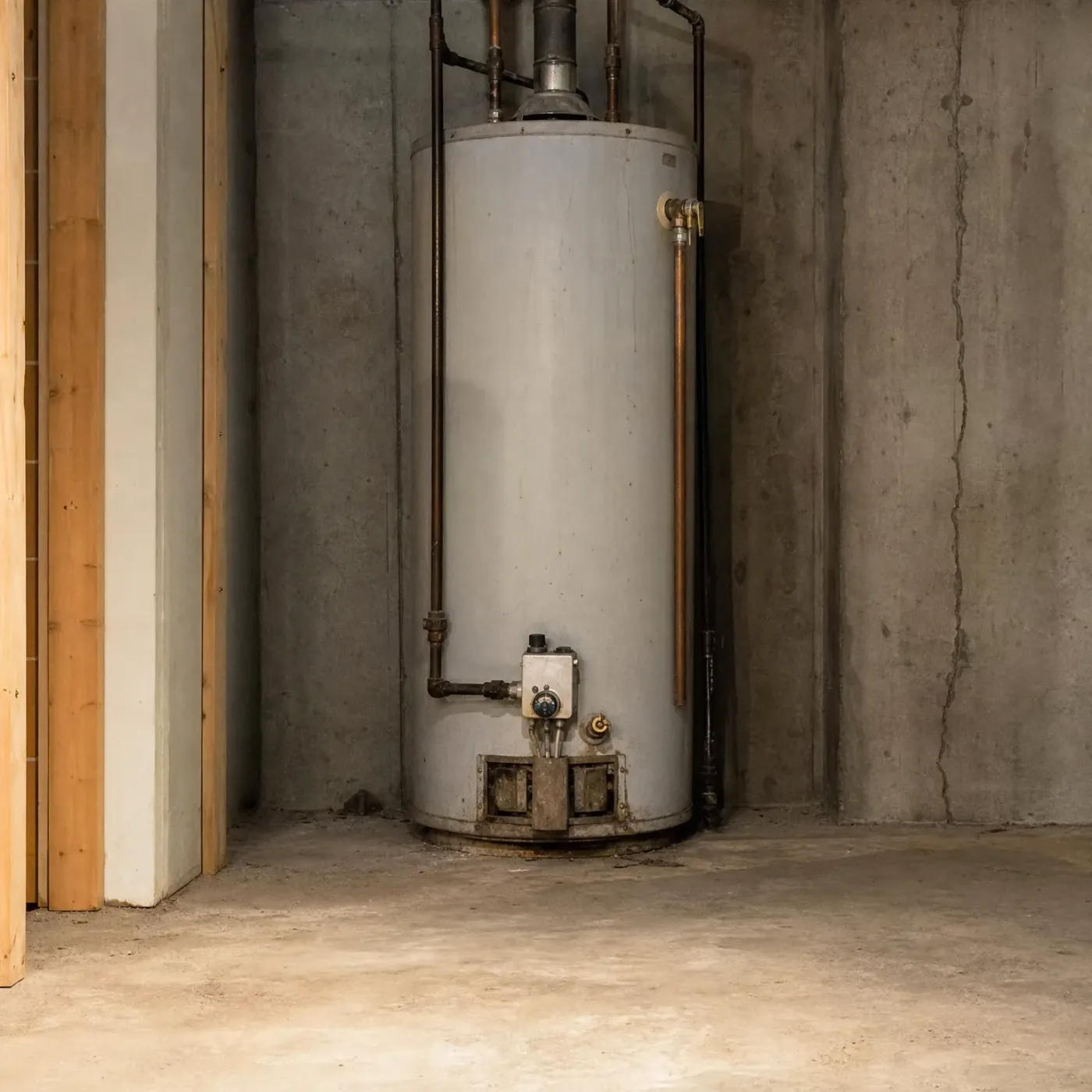
No rust at the fittings, no damp spots on the floor, no puddling at the drain valve. Hot water comes up fast and stays hot through a full shower. The tank holds steady pressure and the panels and connections stay dry. This is what a water heater looks like with good years still ahead of it.
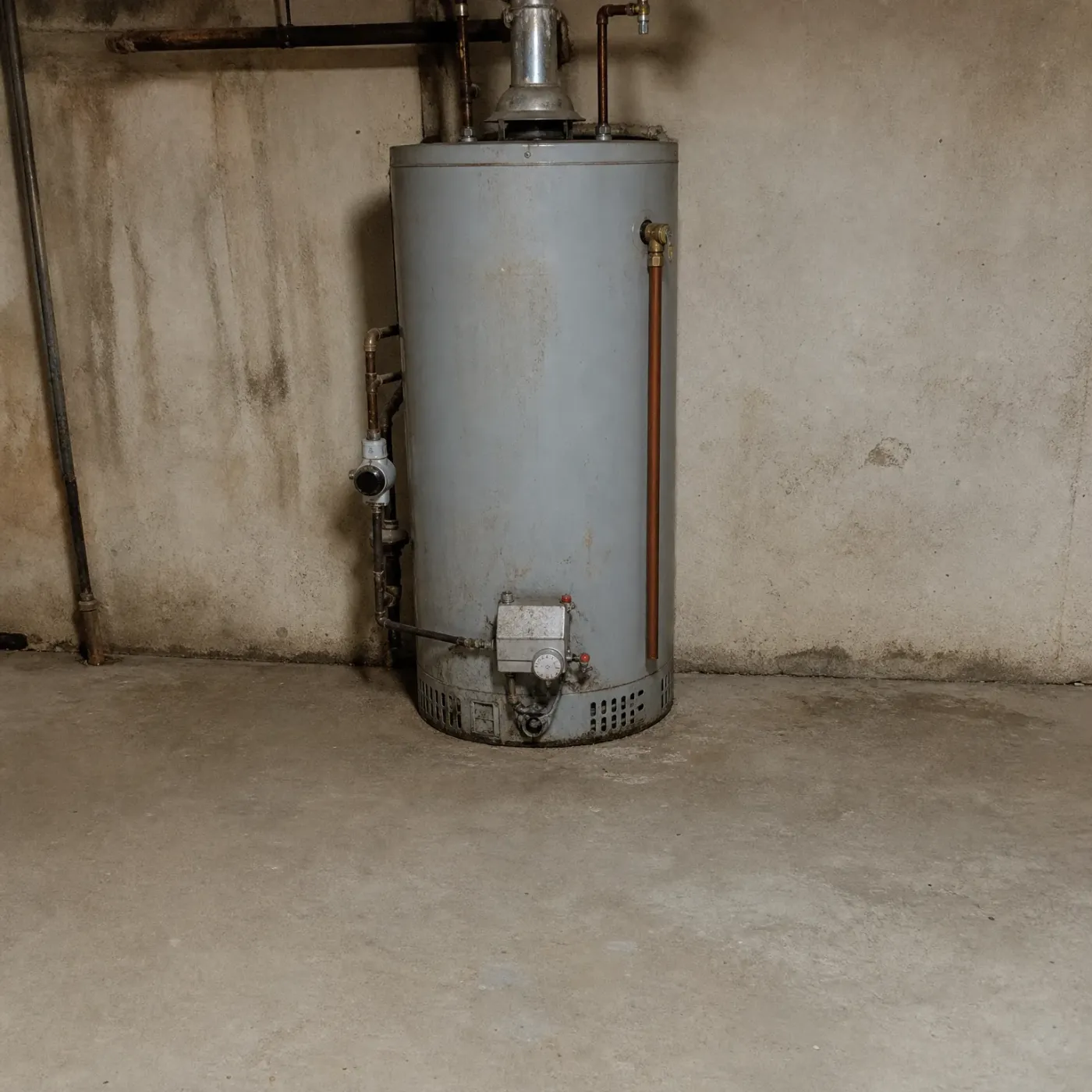
Nearing the end
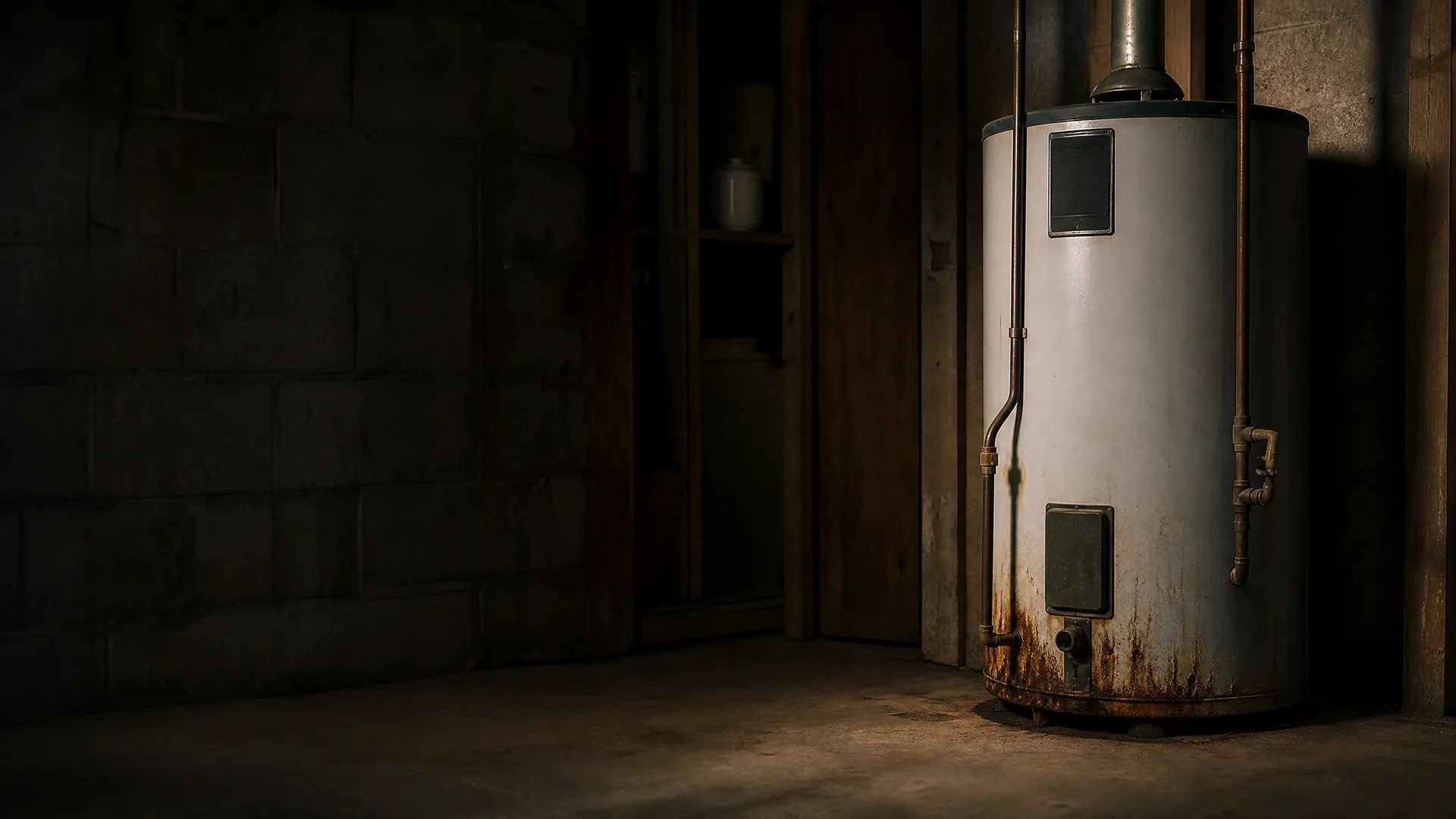
Rust creeping around the gas control unit or the flue vent, water pooling at the base against the concrete wall. The pressure relief valve weeping or the tank making a low rumble as it heats. Hot water runs out quicker than it used to. This is a tank telling you it's closer to done than not.
Is your water heater on its way out
Check the floor around the tank for a damp ring or a puddle near the drain valve. Look at the fittings on top for rust or a crust of white mineral buildup. Listen while it's heating. A rumbling or popping sound means sediment has settled on the bottom of the tank and is hardening there. Water that takes longer to get hot, or doesn't stay hot through a full shower, points the same way. Any one of these on its own is worth watching. A leak from a cracked tank won't seal itself, and left alone it means a sudden loss of hot water and water damage to whatever's stored nearby or on the floor below.
Cold water enters the tank through a dip tube that pushes it to the bottom, where the gas burner heats it first.
A thermostat controls the gas valve, cycling the burner on and off to hold the water at the temperature you set.
The anode rod inside the tank corrodes on purpose, protecting the steel tank for as long as it lasts.
Once the anode rod is used up, the tank itself starts to rust from the inside out with nothing left to stop it.
A pressure relief valve on top opens automatically if pressure inside builds past a safe limit.
Sediment settles at the bottom of the tank over time and can make the burner work harder to heat the same water.
A gas water heater is simple in theory, which is part of why it lasts as long as it does. Cold water comes in through a dip tube that carries it to the bottom of the tank, and the gas burner underneath heats it from there. A thermostat on the side checks the temperature and opens the gas valve whenever it drops below what you've set, so the burner is cycling on and off most of the day, not running constantly. Inside the tank, a long metal anode rod hangs down through the center. It's made to corrode before the steel tank does. The rod gives up its own metal to a slow electrical reaction that would otherwise eat through the tank walls. That's its whole job, and it works until the rod itself is gone. Once that happens, there's nothing left standing between the water and the steel, and rust starts working on the tank from the inside. On top, a pressure relief valve sits ready to open if pressure inside ever climbs past a safe point, which matters more than people think given how hard the burner has to work with Alaska's cold incoming water. At the bottom, minerals in the water settle out as sediment over the years, building up a layer that sits between the burner and the water above it and makes the whole tank work harder to do the same job.
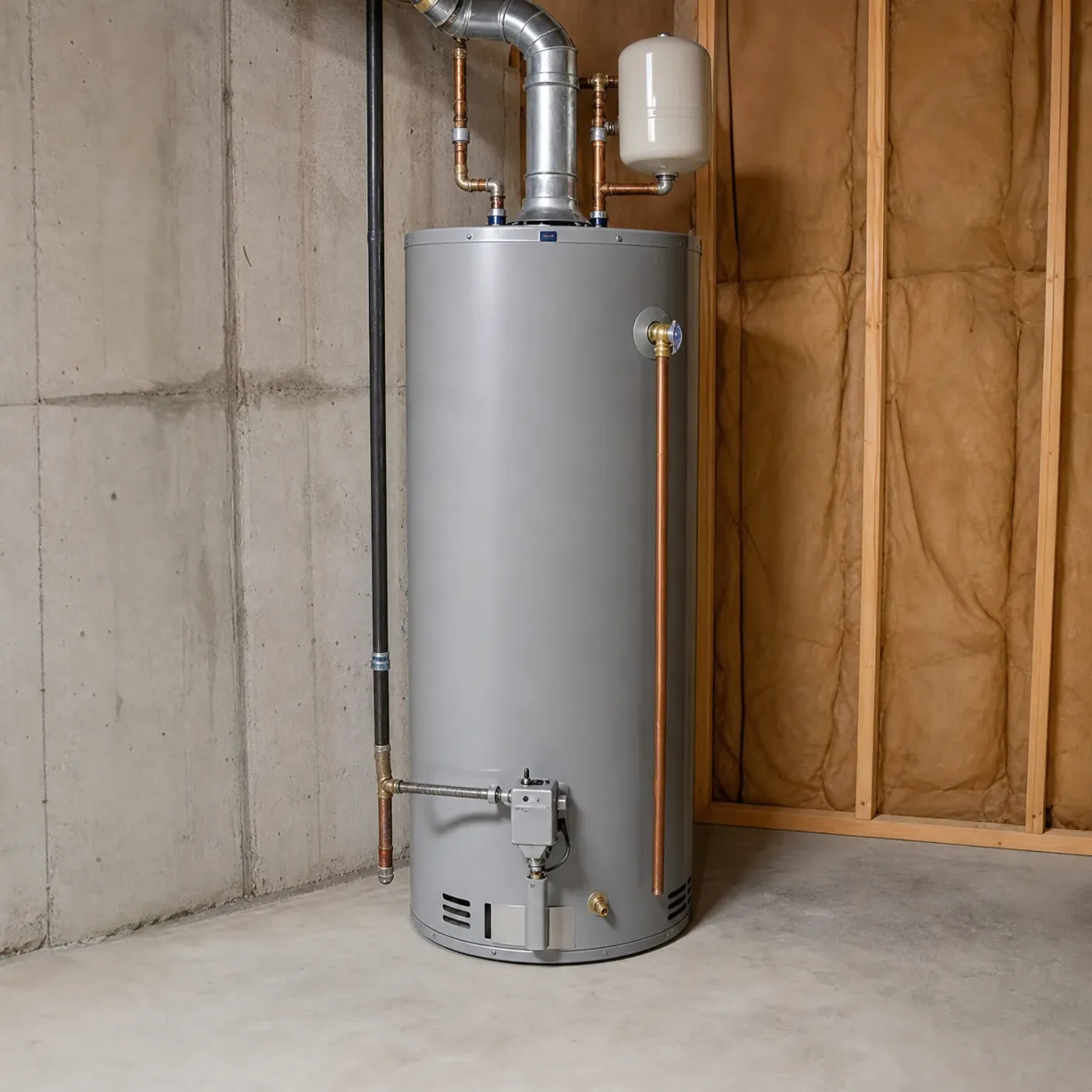
The fittings are dry and the flue vent sits tight, venting the burner the way it was installed to.
Copper lines, iron pipe, and a dial like this hold up fine for years once a licensed installer sets them up right.
You go down to the utility room after dinner to grab something from the shelf, and the light's still on from earlier. It's past nine but still bright out, the way it stays most of the summer. You notice the smell first, something faint and metallic, then you see it: a thin rust streak running down the side of the tank toward the floor, dried in some spots, wet near the base. You crouch down and touch the concrete. Damp. Not a puddle yet. You stand there a minute, working out how long it's been like this, whether it was there last week when you did laundry, before you go back upstairs.
49.1% of homes statewide heat with gas
Close to half the homes in Alaska heat with gas, and if yours is one of them, your water heater is almost certainly gas too, tied into the same line. That means the burner and venting matter as much as the tank when it's time to replace it, not just the tank size.
ACS 2020-2024 5-year B25040
A gas water heater in Alaska lasts 8 to 12 years, and the tank is what ends it, not the burner or the thermostat. Once that lining cracks and it starts to weep, patching it buys you nothing. A rusty fitting, a popping sound while it heats, a pilot that won't hold steady, any of these means it's closer to the end than the start. Catching it early gives you a say in when the work happens, instead of finding out from a puddle on the floor some morning. Gas water heaters here tie into the same line as the furnace most homes run on, so the venting and gas line matter as much as the tank itself when it's time to put a new one in. A licensed local installer who works on these every season knows what to check on yours and what usually gives out first. That's the piece worth getting right, since the tank will not give you much warning once it starts to go.
Water Heater Installation
Describe it once
Your request goes to one pro, not a list of companies.