Get in touch with a local installer about a new water heater.
Sizing a water heater for an Alaska home isn't a guess, and it isn't the same answer you'd get in a warmer state. Incoming water temperature up here runs colder, so the tank or tankless unit that works fine somewhere else can leave you short. Get the size wrong and you either run out of hot water on a winter morning or pay to heat more than you use.
Most homes here run on gas, and with power costs among the highest in the country, the choice between gas and electric, and between tank and tankless, changes what you pay to run it every month. That's a real factor when you're sizing a replacement or a new install, not an afterthought.
Getting this right takes someone who knows how household size, fixture count, and your home's incoming water temperature add up to a number. That's a different question for a two-bedroom house than a five-bedroom one, and different again if you're adding a soaking tub or a second bathroom.
You could spend an afternoon calling around, explaining your house to one contractor after another, and still end up comparing quotes that sized the job differently. This page skips that part. Answer a few questions about your home and you'll be matched with a contractor who installs water heaters and knows what sizing them in Alaska actually takes. They'll reach out to you directly, with your situation already in hand, not a sales script.
No promises about price or timeline here, because those depend on your house and what you choose. What you get is the right contractor looking at your actual situation, instead of you trying to guess the number yourself or hoping the first company you call has it right.
The details on sizing your unit correctly are below. The faster path to getting it installed right starts with the button above.
Most households in Alaska with two to three people do fine with a 50 to 60 gallon gas tank, and larger families often need 75 gallons or a tankless unit sized for the coldest water your utility delivers. The reason comes down to groundwater temperature. Incoming water here can sit in the 40s, well below what a heater in a warmer state has to work with, so the unit has to raise it that much further to hit a usable 120 degrees at the tap. A tank or tankless model sized by a chart built for milder climates will run short during a shower or struggle to keep up when two people need hot water at once. Since most homes here already run on gas, a properly sized gas tank or a tankless unit rated for your groundwater temperature keeps recovery fast without leaning on electric backup, which matters given what power costs here. Getting the size right the first time means no second-guessing it every winter.
Before you get your water heater installationAfter you get your water heater installation
Why groundwater temperature changes the math
A gas water heater has to lift incoming water to the temperature you set at the tap. Utilities in much of the country deliver groundwater in the 60s, but Alaska runs colder than that, sometimes near 40 degrees. A tank sized for a warmer state is doing more work to close that gap here, and if it's undersized, the house runs out of hot water faster because the unit never gets a head start. A tankless unit faces the same math, it just has to heat that colder water on the fly instead of holding a reserve.
What a gas burner has to keep up with
A gas tank recovers faster than an electric one because the burner sits under the tank and heats it directly, instead of relying on elements inside. That recovery rate matters more here than in places with warmer intake water, since every gallon drawn out has to be reheated from a lower starting point. A 50 gallon gas tank in a warm state and a 50 gallon gas tank in Alaska are not delivering the same amount of usable hot water over the course of a shower or a load of laundry.
Skip collecting and comparing quotes for the new water heater.
Asking costs nothing, and the choice to hire stays yours.
An undersized tank means the shower runs cold halfway through, and in an Alaska winter that's not a minor annoyance, it's a reason to get the water heater right the first time.
A gas water heater sized for the water coming into your house keeps up on the coldest day of the year, not just the mild ones.
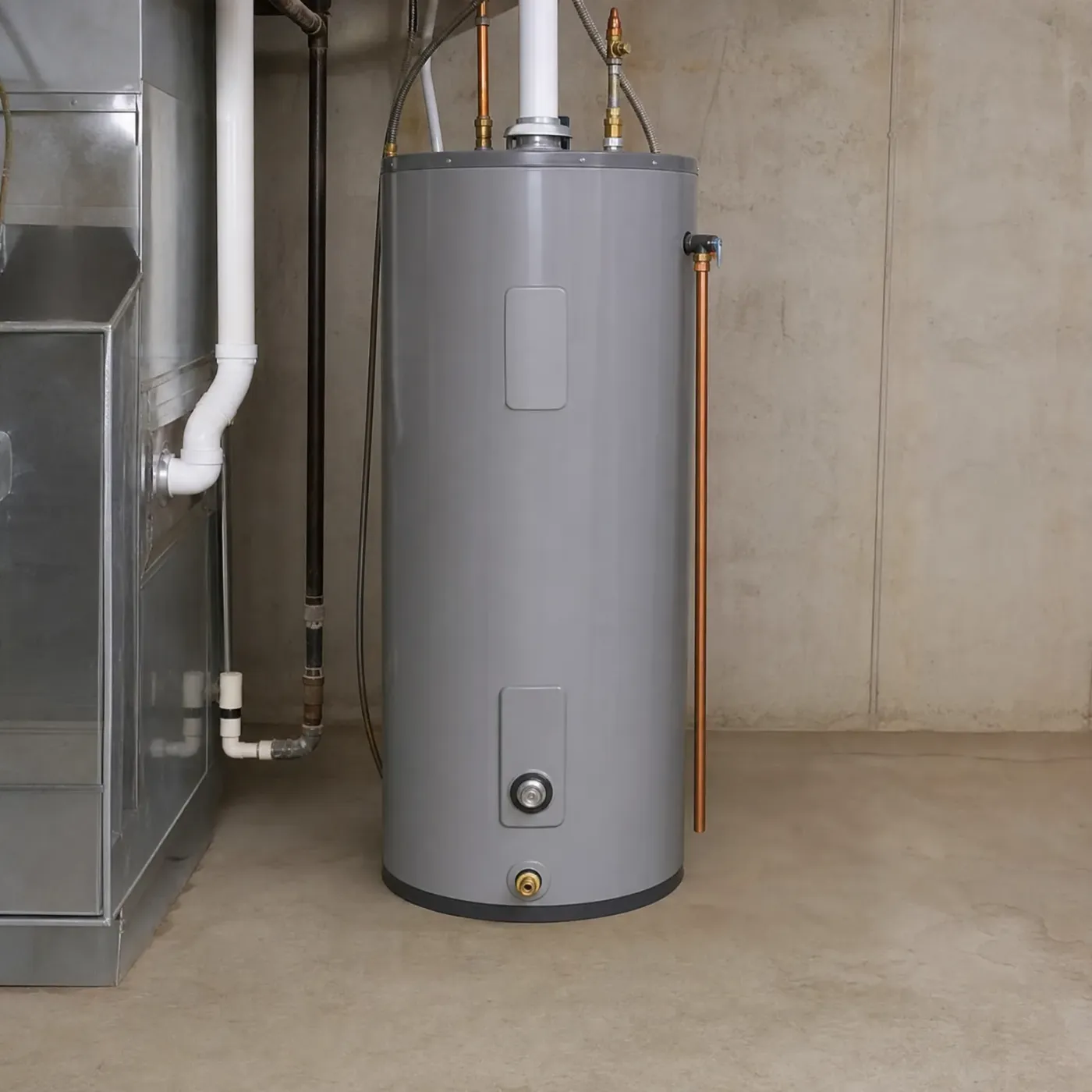
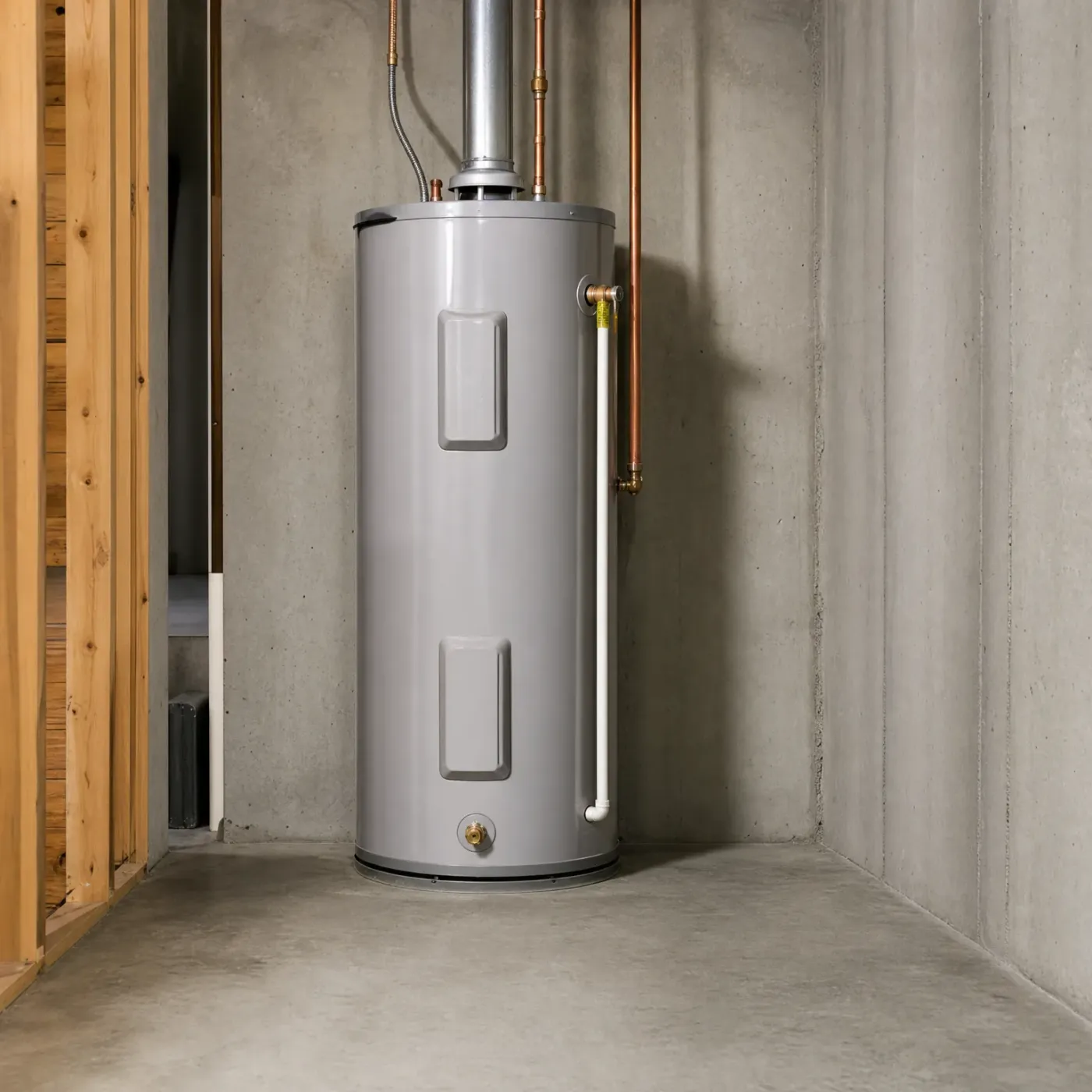
Sized right, working as it should
The copper supply lines and flue vent run straight and solid, and the tank handles the cold groundwater without strain. This is what a gas water heater built for your incoming temperature looks like after installation, holding up through daily use.
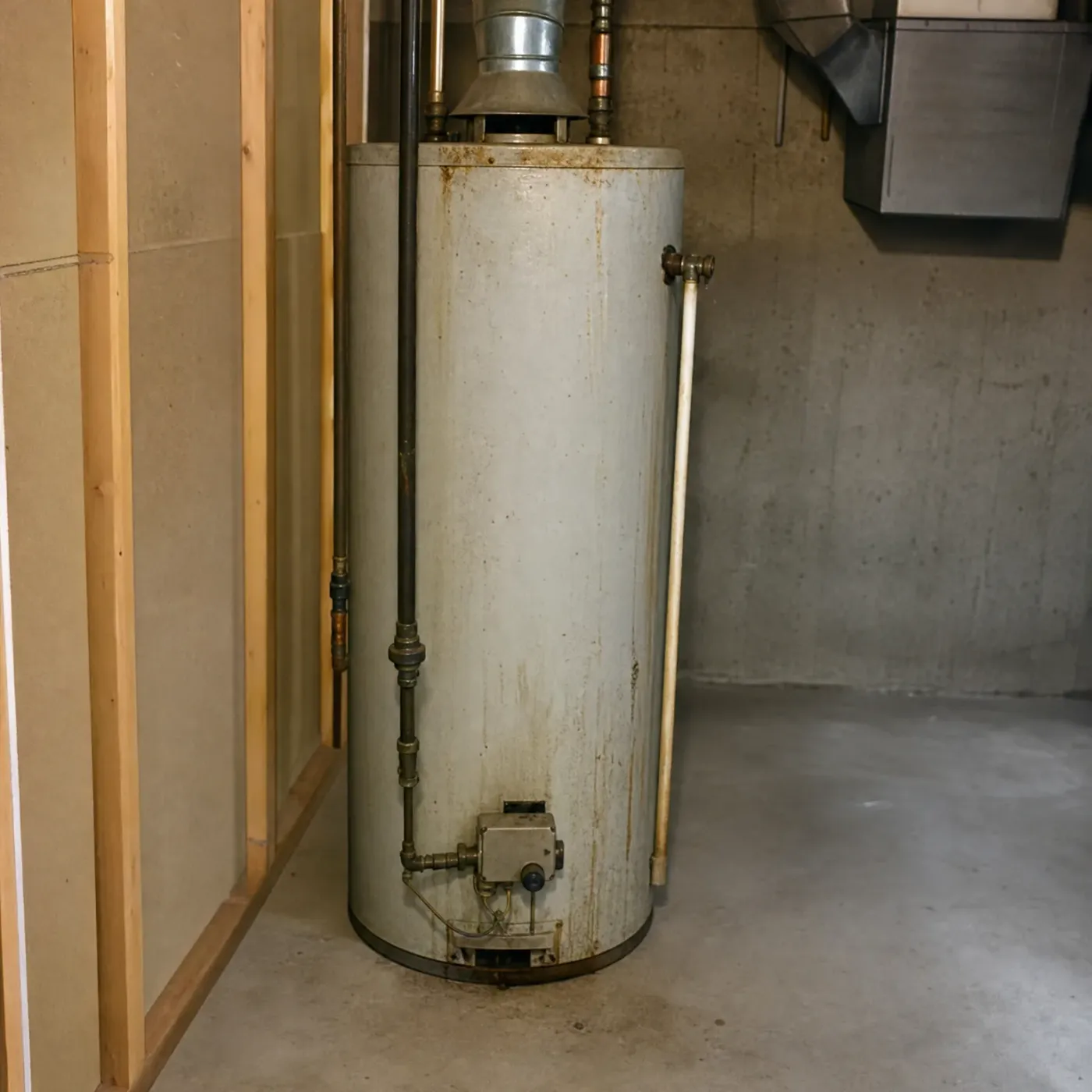
Rust and corrosion, a sign it's done
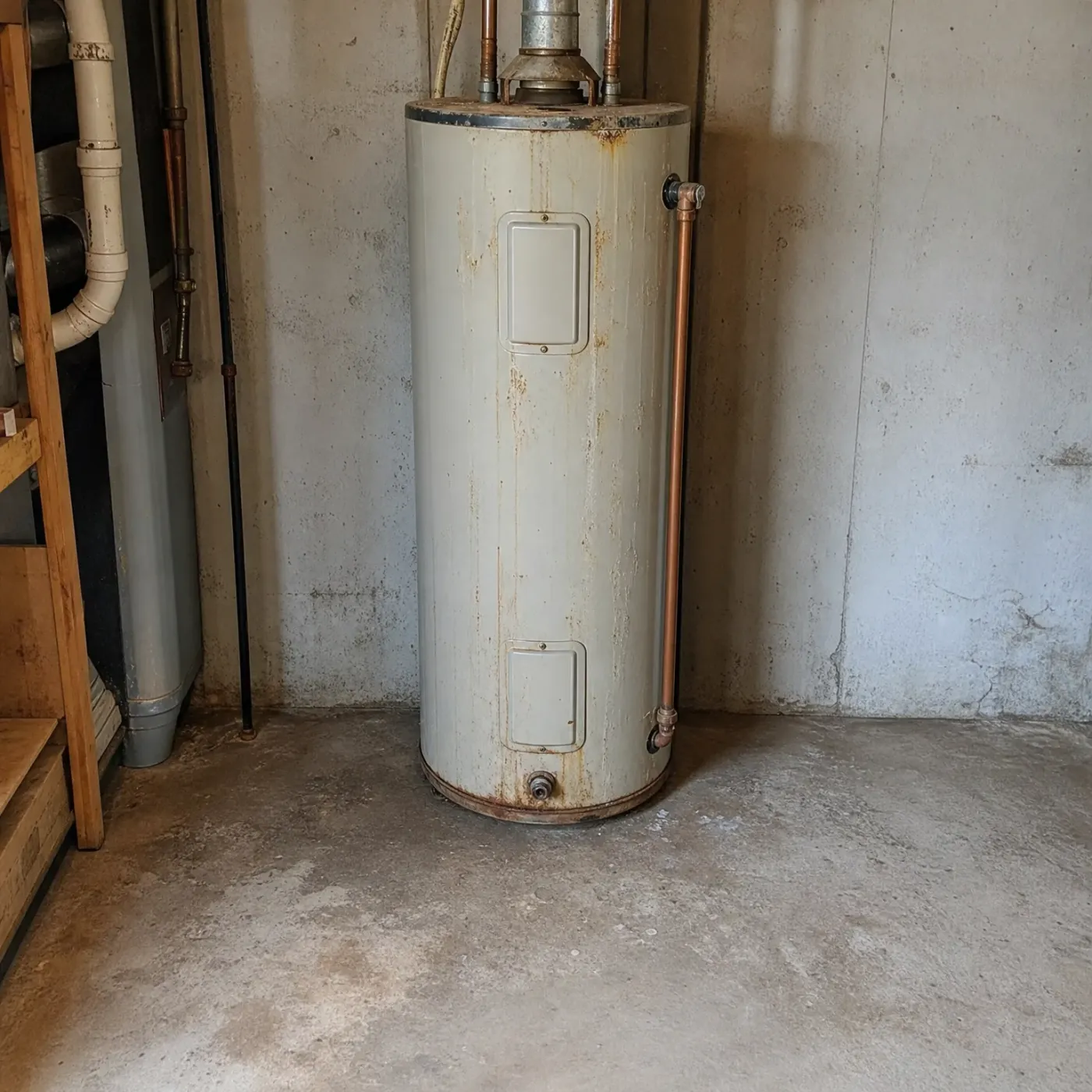
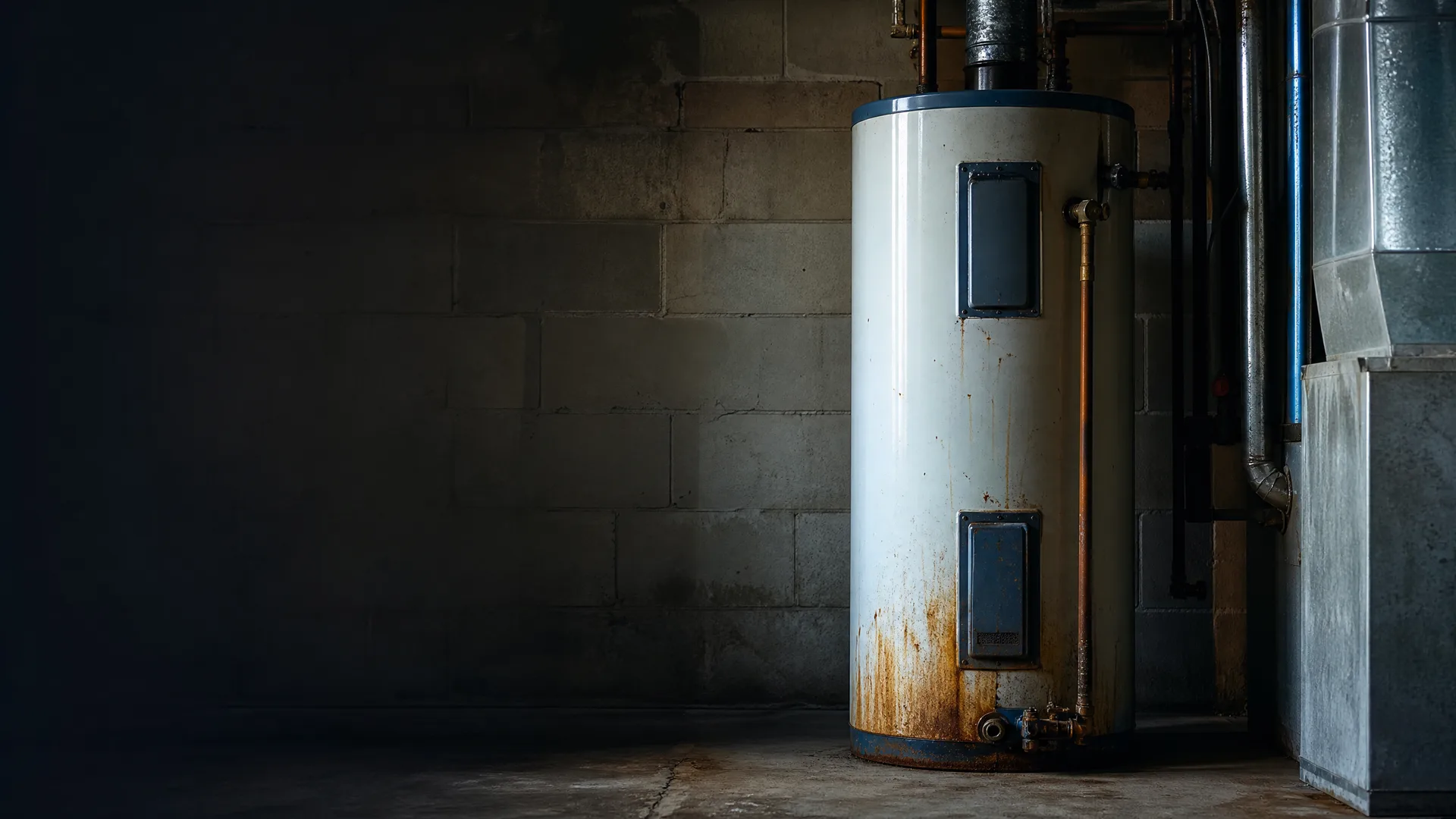
Surface rust like this often means the tank was never matched to Alaska's cold groundwater, or it's simply old. Once corrosion sets in, a tank works harder for less hot water, and the risk of a leak onto that concrete floor goes up.
49.1% of homes statewide heat with gas
If your water heater runs on gas, you're in the majority here, close to half of Alaska homes heat this way. That's worth knowing when it's time to replace it: a gas unit sized for your incoming water temperature is a known quantity for installers across the state, not a special case.
ACS 2020-2024 5-year B25040
The water heater sits in the corner of the utility room, rust streaking down from the base onto the concrete. It's past seven and the house has gone quiet. You come down to swap a load of laundry and catch the smell first, that faint metal and damp smell before you even look. The streaks are darker than last time you noticed them, running further down toward the floor drain. Outside the days are still long this time of year, but down here with one bare bulb on, it feels later than it is. You crouch and press a thumb near the base. The metal gives slightly. You straighten up, leave the laundry running, and go find your phone.
The right size comes down to your incoming water, not the national average
Alaska's cold groundwater is the whole reason the sizing answer differs here. A 50 to 60 gallon gas tank covers most two to three person households, larger families often need 75 gallons or a tankless unit matched to the coldest water the utility delivers. That's the number to start from, and it's the one worth getting right before a new unit goes in.
Finding someone who sizes it correctly usually means calling around, explaining your household and your utility's water temperature more than once, and sorting through quotes that may not even account for it. When you go through this page instead, that work is off your plate. You get matched with a contractor who installs water heaters for homes with your specific situation, and they'll reach out to you directly to take it from there.
Water Heater Installation
Get the right pro for your water heater
Step 1 of 3: Equipment
Say what's going on with your water heater, and a pro who works on them reaches out.
A local pro who knows water heaters gets your details and gets in touch.
Send the form and the search for an installer is over.
Send the form and stop researching installers for the new water heater.
One form replaces the calls you'd make to find a water heater pro.
Skip the round of in-home estimates for a new water heater.
One installer gets your project, so there's no bidding war over it.