Profile view of a bearded man wearing a black baseball cap and a dark gray T-shirt against a plain light background.

Why your hot water is lukewarm in Alaska

Step 1 of 3: Equipment

Lukewarm water usually means the heating element or burner isn't keeping up with the demand on it, not that the tank is failing outright. In a gas water heater, that's often a dirty burner, a failing thermocouple, or sediment sitting on the bottom of the tank and blocking heat from reaching the water above it. In an electric unit, it's often a lower heating element that's gone bad while the upper one still works, so you get some warm water, just not enough and not for long. Sediment buildup is common in most water heaters over time, gas or electric, and it gets worse the longer it sits. If your hot water has gone from fine to lukewarm gradually, that's usually sediment or a dying element. If it happened all at once, suspect a failed part. Either way, it's a repair issue, not something a full reset can fix for long.

A smiling woman with dark shoulder-length hair in a cream V-neck sweater sits at a marble counter with a glass of red wine, with a kitchen and softly lit living room behind her.
A woman in a dark green sweater laughs while seated at a marble kitchen island with a glass of red wine, with open shelving, cabinets and a living room visible behind her.
A woman with long dark hair in a cream knit sweater laughs while looking off to the side, seated at a counter with a glass of red wine, in a dimly lit living room with a sofa, lamp, framed pictures and houseplant behind her.
A smiling woman with long dark hair in a beige sweater sits at a marble kitchen counter with a glass of red wine, with a dimly lit living room behind her.

Sediment builds up faster in tanks that run hard, and most Alaska homes run their water heater hard all year, not just in winter.

A layer of sediment between the burner and the water acts like insulation, so the burner fires longer and the water still comes out lukewarm.

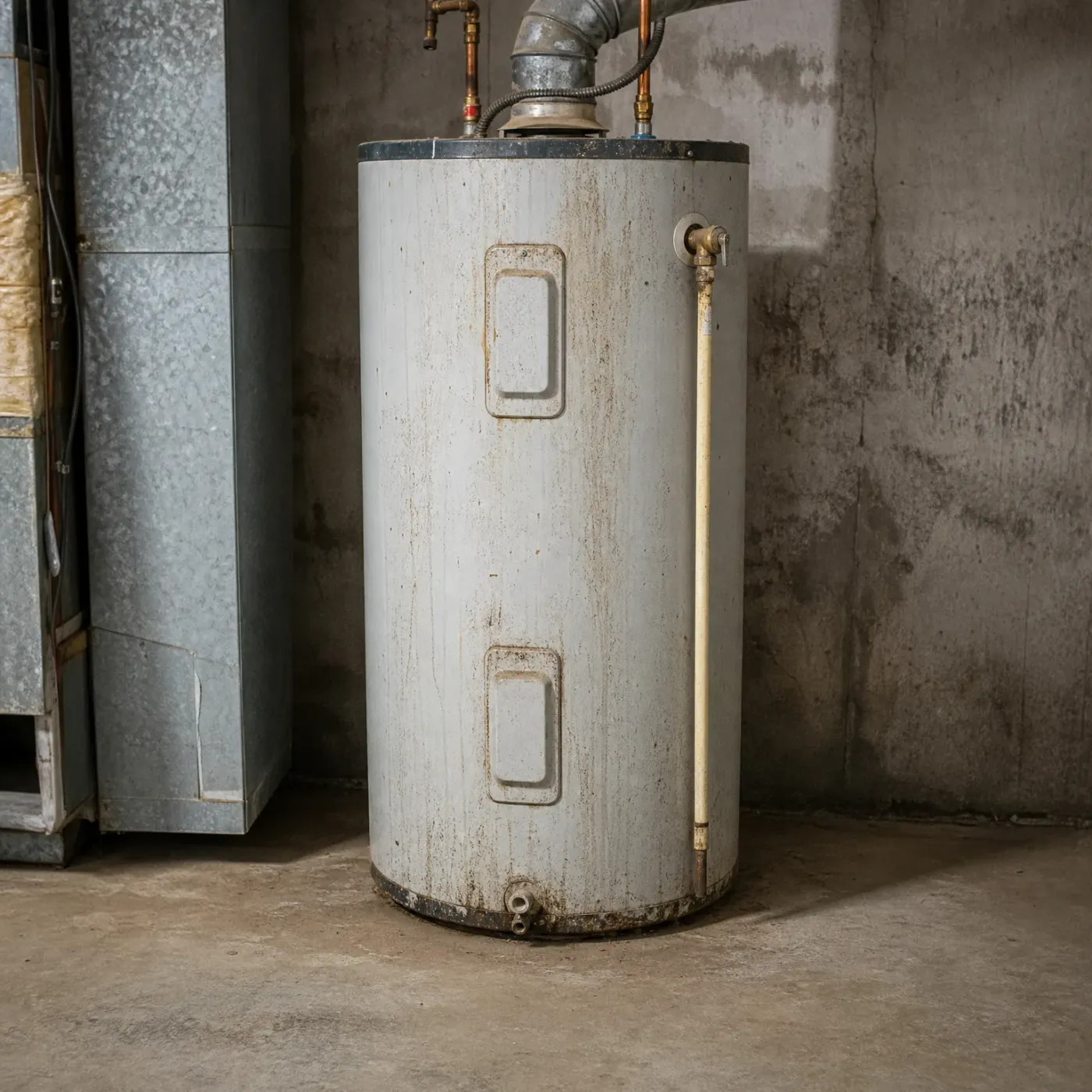
An old rust-streaked cylindrical water heater with two access panels, copper pipes and a flue at the top, and a discharge pipe along its side, standing on a concrete floor beside galvanized ductwork against a bare concrete wall.
Before you get your water heater repair
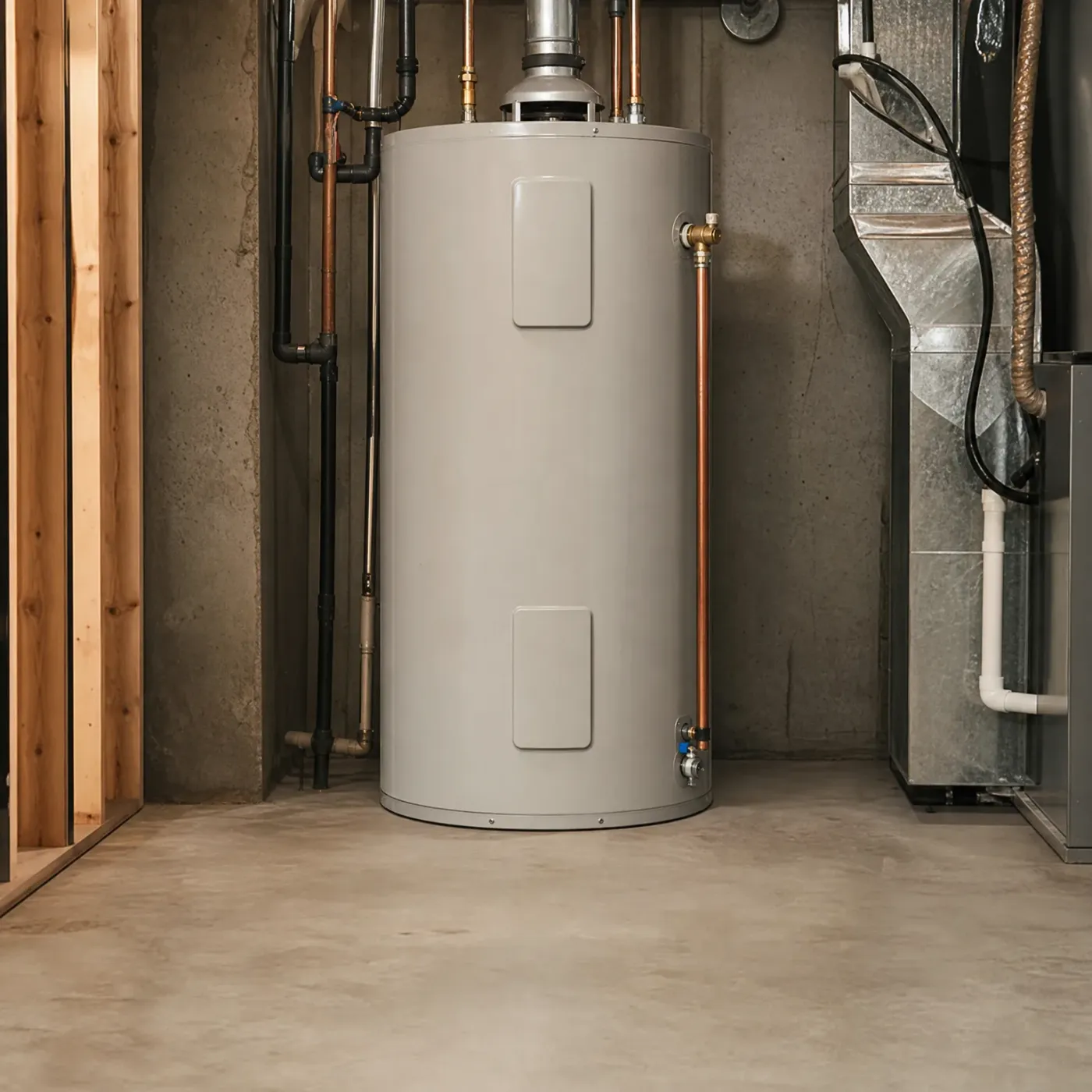
A gray cylindrical water heater with copper piping and access panels stands against a concrete basement wall beside ductwork and vertical pipes.
After you get your water heater repair

Burner runs longer, bill climbs

A struggling burner has to fire longer to get the same water temperature. Power here already costs more than most places, and a water heater working overtime adds up fast.

Skip the calls

Stop calling around

No need to explain the lukewarm water to three different companies or sort through quotes yourself. You get matched with a contractor who handles it, and they reach out to you.
Skip the calls

Live With It or Get It Fixed

Keep living with it

  • You keep adjusting the shower handle every time the water drifts cold halfway through.
  • The burner keeps firing longer than it should, and that shows up on a power bill that's already steep in Alaska.
  • Sediment sitting on the tank bottom keeps building, which makes the burner work harder each week it's ignored.
  • A failing thermocouple can go from annoying to no hot water at all without much warning.
  • You're still the one calling around and repeating the same description of the problem to every contractor you reach.

Get it looked at

  • A contractor can tell you in one visit whether it's the burner, the thermocouple, or sediment buildup causing the lukewarm water.
  • Clearing sediment or replacing a worn part stops the burner from overworking itself on every tank of water.
  • You stop losing evenings to phone calls, comparing quotes, and explaining the same issue more than once.
  • Once you're matched, the contractor reaches out to you instead of you chasing down who's even available.
  • You get a straight answer on what's actually wrong instead of guessing from a water temperature that keeps changing.
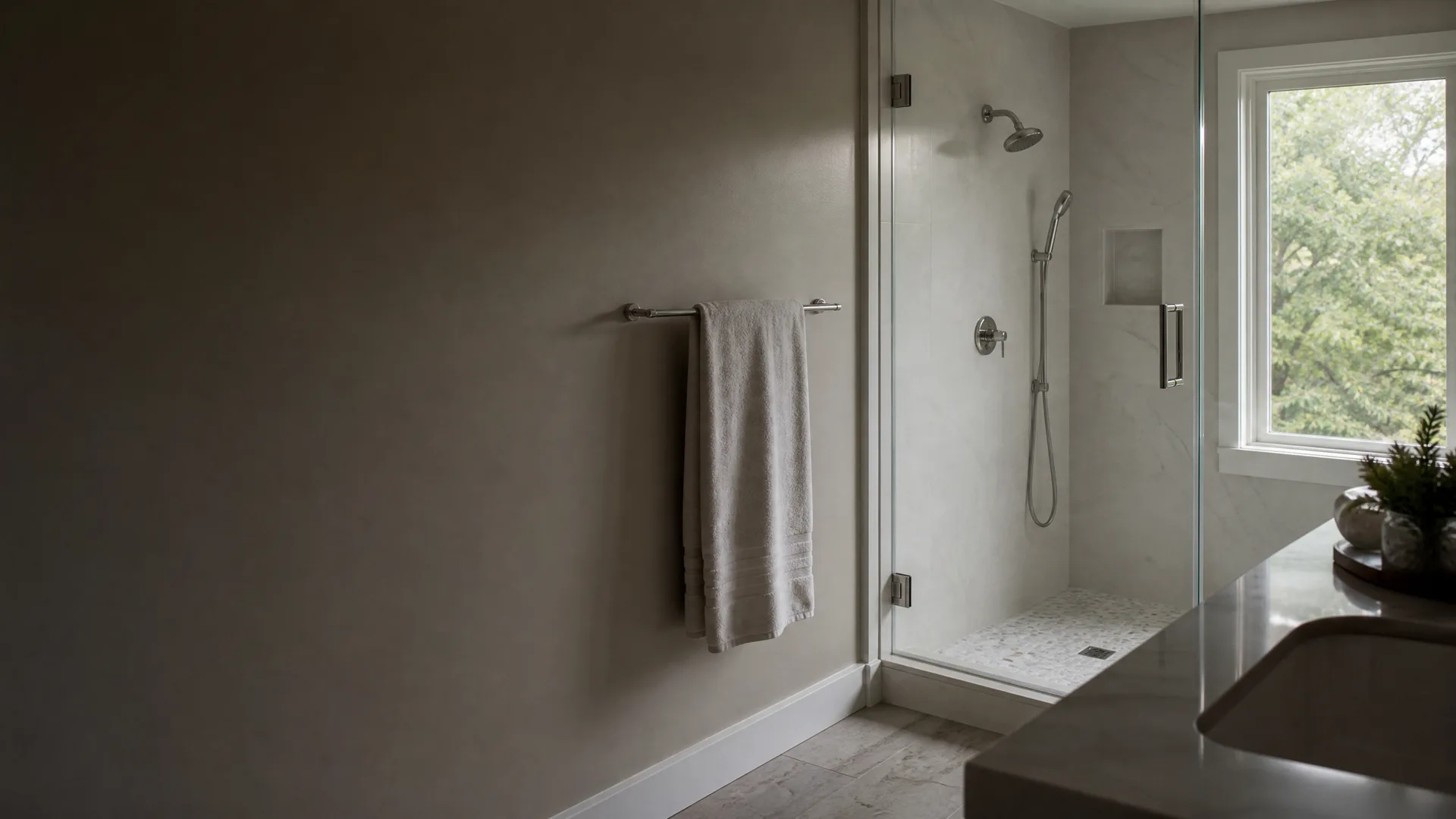
A bathroom with a gray towel hanging on a bar against a taupe wall, a glass-enclosed shower with marble-look tile, showerhead and handheld sprayer, a window showing green trees, and a stone countertop with a sink at right.

The upstairs bathroom is still cold from the night when you turn the shower on and start getting ready. No steam shows on the mirror the way it should. You reach in and the water's gone from warm to cool already, and it's not even the weekend rush, just you getting up for work on a Tuesday. The towel's waiting on the rail like always. You stand there turning the handle further toward hot, listening to the burner under the tank kick on again, longer than it used to. Outside it's still dark, still Alaska cold most of the year, and the water heater in the closet down the hall is working through all of it alone.

The right pro for this job

You've already adjusted the shower handle one too many times this week, and you know by now it's not going to fix itself. Finding someone to look at it means calling a few places, describing the same lukewarm water and the same cold mornings more than once, then waiting to see who calls back with a number. That's the part worth skipping. A gas water heater that's lost its edge, whether it's the burner, the thermocouple, or sediment sitting where it shouldn't be, needs someone who can actually look at the tank, not another round of guesses over the phone. With power costing what it does here, a burner that's working too hard to make up for the problem is already costing you something every day it goes unfixed. Hand off the finding-help part and get back to a shower that steams the mirror like it should.
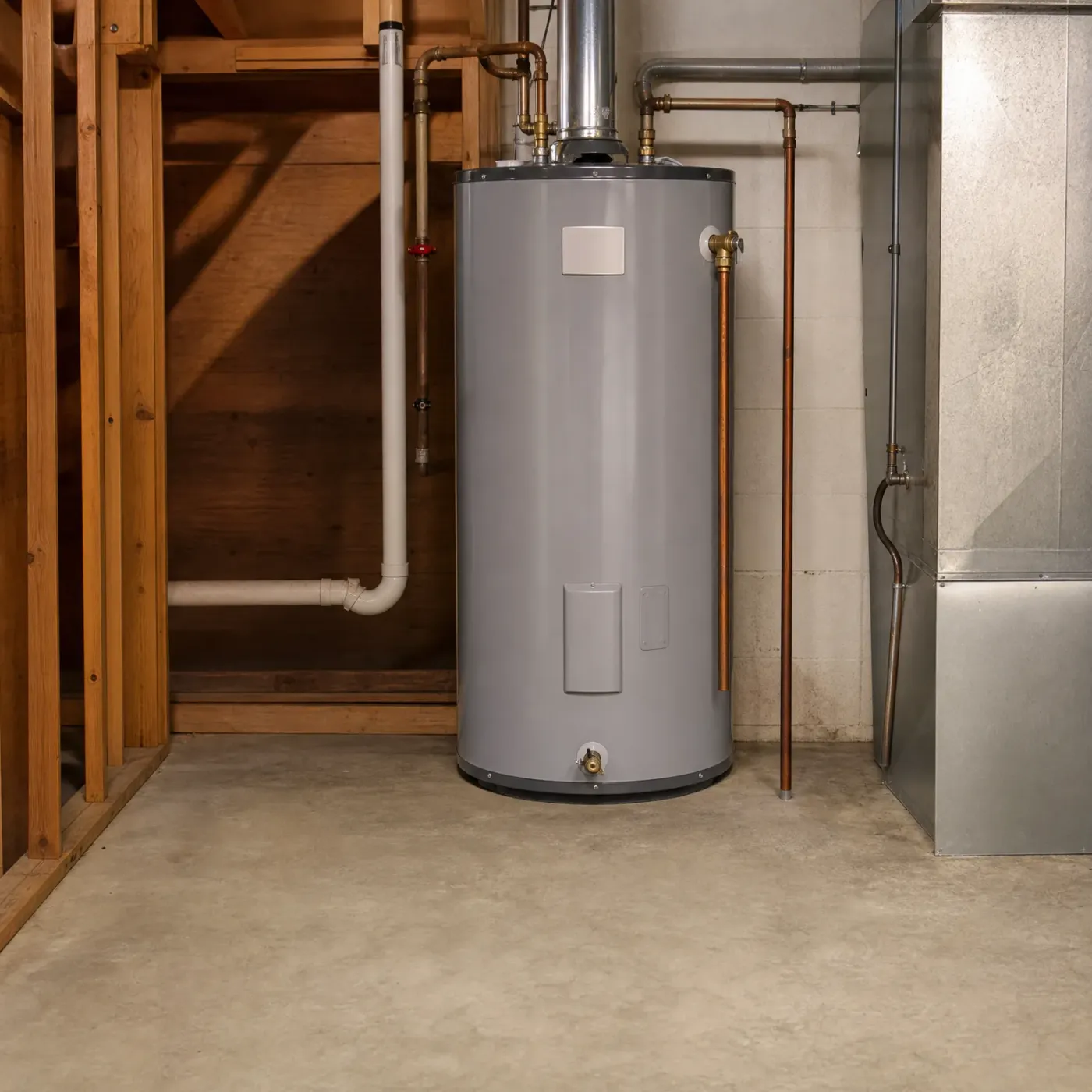
A gray cylindrical water heater stands on a concrete basement floor between an unfinished wood stud wall and a metal furnace duct, with copper and PVC pipes running along the concrete block wall.

Working the way it should

A water heater like this holds steady, heating water on demand and sending it up through the pipes at the temperature you set. The burner or element cycles on, does its job, and shuts off. No guesswork at the shower handle.
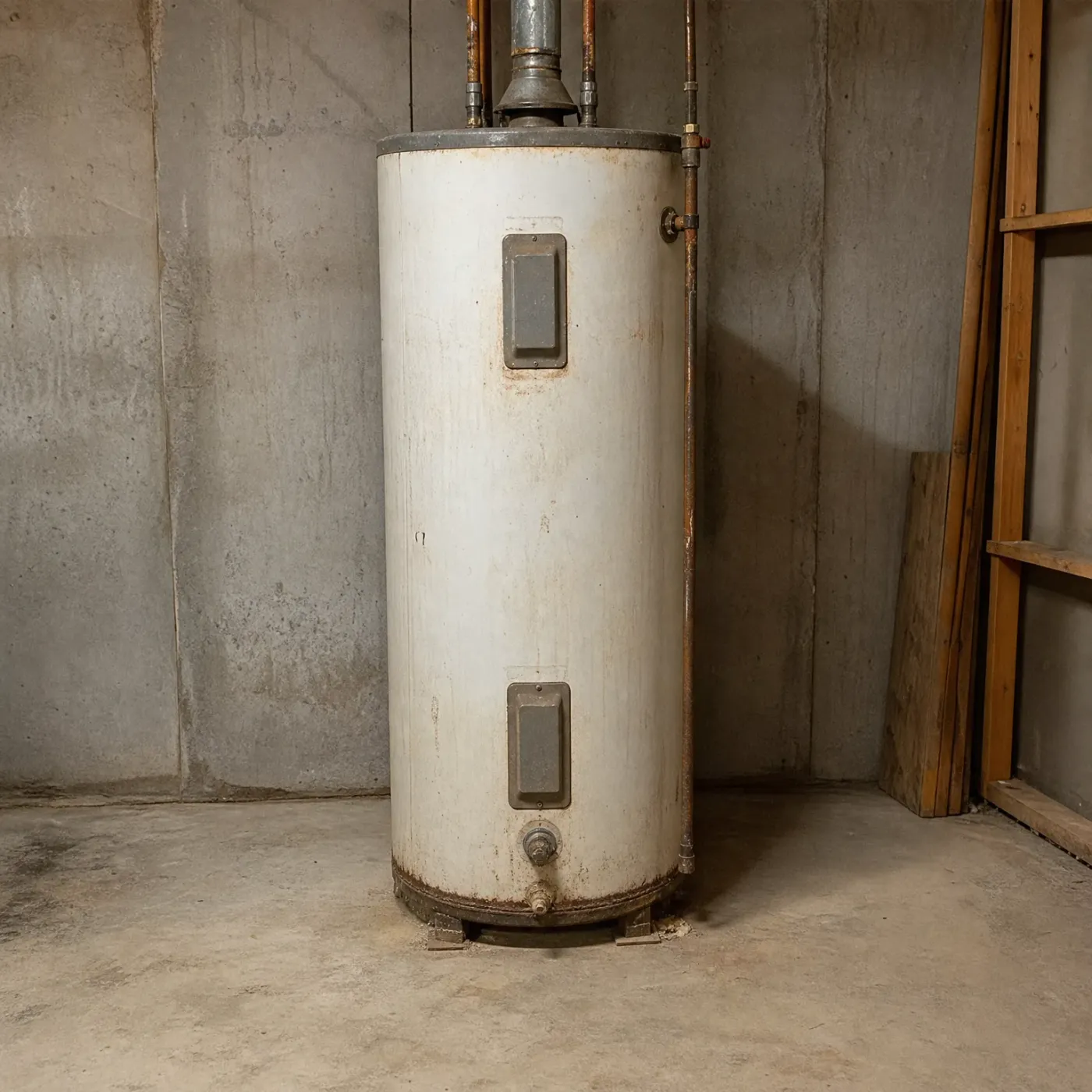
A rusted white cylindrical water heater with two access panels stands in a concrete-walled basement corner, with pipes rising from its top and wooden boards leaning against the wall at right.

Rust and wear catching up with it

Rust spreading across the tank like this often means the inside has been breaking down for a while. Sediment collects at the bottom, the burner works harder to push heat through it, and the thermostat panels up front can't fix what's happening underneath.

Why does my gas water heater run out of hot water so fast?

A family of four in Alaska sharing one bathroom in the morning knows the usual math: everyone gets a hot shower if they space them out. But lately the hot water is gone by the second shower, sometimes the first, and the tank size hasn't changed. Something about how fast it's running out points to the burner itself, not just demand.

The burner is heating less tank than it used to

A gas water heater warms water from the bottom up, so the hot layer you draw from sits above the burner. When sediment collects on the tank floor, it takes up space the burner used to heat directly, and it blocks some of the heat from reaching the water at all. The result is a smaller usable hot water layer, even though the tank itself holds the same number of gallons. You run out sooner not because you're using more, but because less of the tank is actually getting hot. This is common in Alaska, where water heaters run hard all year and sediment has more time to build up undisturbed.
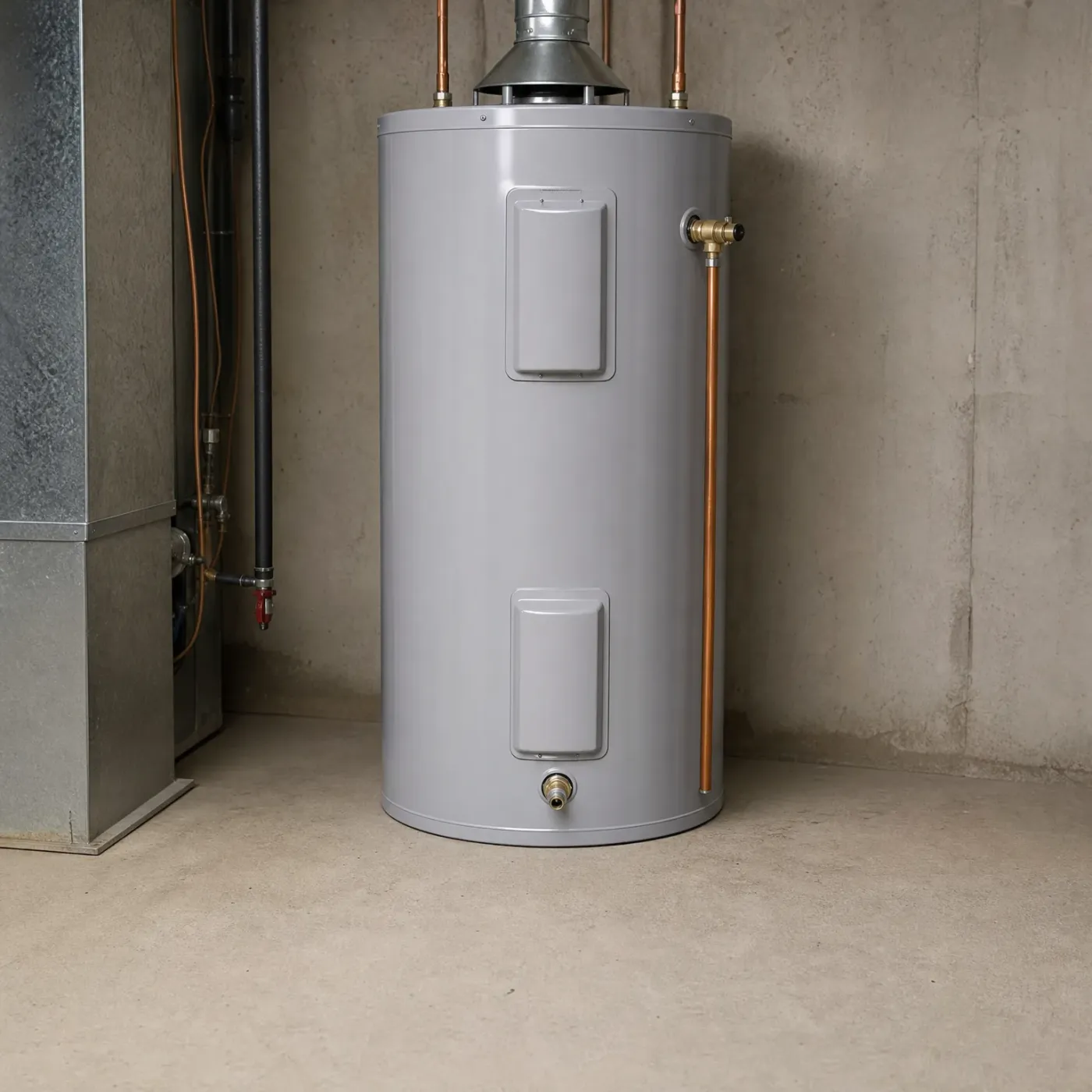
A gray cylindrical water heater with copper piping and a flue stands on a concrete floor in a basement corner beside ductwork and metal equipment.
A water heater in good shape heats steadily, so the tank, the valve, and the flue all do their job without strain.
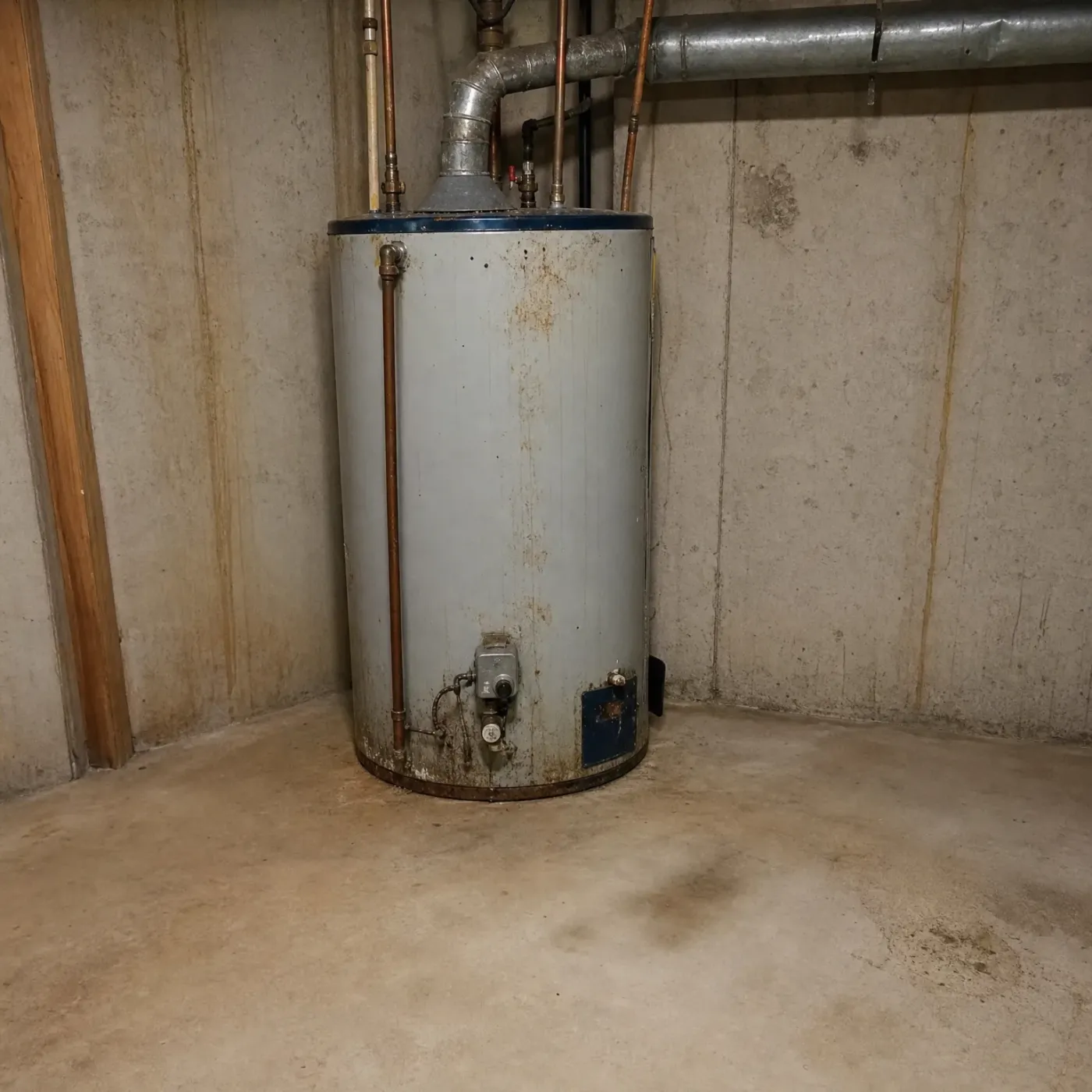
An aging gas water heater with rust streaks stands in the corner of a concrete-walled basement, with copper pipes and a metal flue duct running overhead.
Rust like this on the tank and the floor means the water heater is failing, not just running behind on hot water.

49.1% of homes statewide heat with gas

Close to half the homes in Alaska run on gas heat, and yours is likely one of them. That means a burner and a thermocouple doing the work, not an electric element. When the burner's dirty or sediment's built up underneath it, lukewarm water is usually where it shows first.

ACS 2020-2024 5-year B25040

A smiling bearded man in a navy sweater sits at a candlelit dinner table with a glass of red wine, a bowl of salad, and plates of food in the foreground.
A woman with dark hair in a bun reclines on a sofa with her eyes closed, wrapped in a cream fleece blanket, a closed blue hardcover book resting in front of her, with a lit lamp and a vase of dried flowers in the background.
A man seen from behind raises his hand to wave at a woman standing in the open front doorway of a single-story house with gray shingle siding, white columns and a gabled porch entry.

Lukewarm water has a reason behind it

A burner that can't keep up or sediment sitting between the flame and the water is almost always why your shower goes cold halfway through. That's a repair, not a reason to replace the tank. Once the burner's clean and firing the way it should, the water heater goes back to doing what it's supposed to do, heat steadily and send hot water up through the pipes at the temperature you set.

Getting there doesn't mean calling a few places, describing the same cold mornings each time, and sorting through quotes on your own. You get matched with a contractor who takes on jobs like this one, and that contractor reaches out to you. One call explained, not four.


A living room corner with a beige upholstered armchair holding navy and striped cushions, a small round wooden side table with a carved bowl and a potted green plant, a framed landscape picture on a pale wall, built-in shelving, and a curtained window.
A covered porch with a wood front door with six upper glass panes, a lantern wall sconce, tapered column on a stone base, potted ferns and flowers, a woven doormat, and wide steps leading to a paver walkway bordered by shrubs and white hydrangeas.
A beige upholstered sofa with a cream cushion and chunky knit throw sits beside a white-framed window, with a leafy potted plant in a stone vase against a tan wall.
Sunlit corner of a room with a linen curtain beside a window, built-in shelves holding ceramic vases, wooden bowls, a potted green plant, stacked books and a woven basket, above a textured rug.
A dark wood three-drawer dresser against a pale wall holds a tall ceramic vase with leafy branches, stacked books and a shallow bowl, with a framed print above, a woven basket on the wood floor at left, and an upholstered sofa with a green pillow in the foreground.
A cream upholstered sofa with a textured ivory cushion and a rust-colored cushion sits beside a window with sheer linen curtains, with a potted leafy plant behind it and a wooden bowl on a wood table in the foreground.

Matched to your water heater job

Describe what your water heater is doing once, in one form.

Describe it once

Asking costs nothing, and the choice to hire stays yours.