

Why your hot water smells like rotten eggs in Alaska

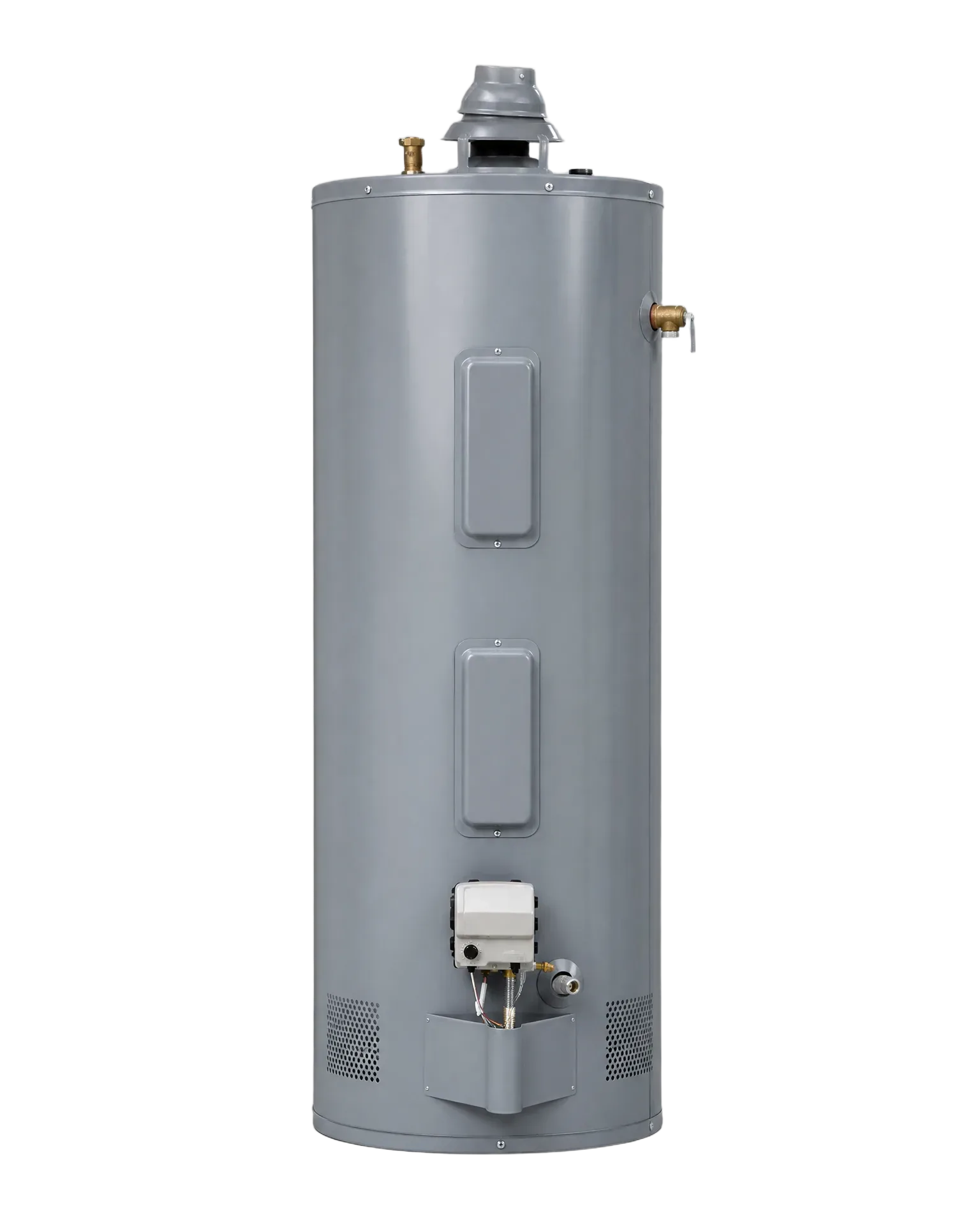
A gray cylindrical gas water heater with a top flue hood, brass fittings, two access panels, a control valve and burner cover, photographed against a plain gray background.
Hand it off

That rotten egg smell is hydrogen sulfide gas, and it forms when bacteria in the tank react with the magnesium or aluminum anode rod most water heaters use to stop the tank from rusting out. Gas water heaters run hotter and more often than other setups, and that heat speeds up the reaction, which is why gas-heated homes here notice it more. Well water can make it worse since well water tends to carry more of the sulfate bacteria that cause the reaction, but it happens on city water too. The smell doesn't mean your water is unsafe to use, but it does mean something is breaking down inside the tank, and left alone it tends to get stronger, not go away on its own. A plumber can flush the tank, swap the anode rod for a different material, or treat the water, depending on what's causing it in your case.

A smiling man with dark curly hair in a navy t-shirt sits on a gray couch indoors, with a large-leafed plant and a window in the background.
A bearded man in a plaid flannel shirt stands in a kitchen looking out a window toward snow-covered shrubs, with a steaming mug on the windowsill and potted plants on a shelf behind him.
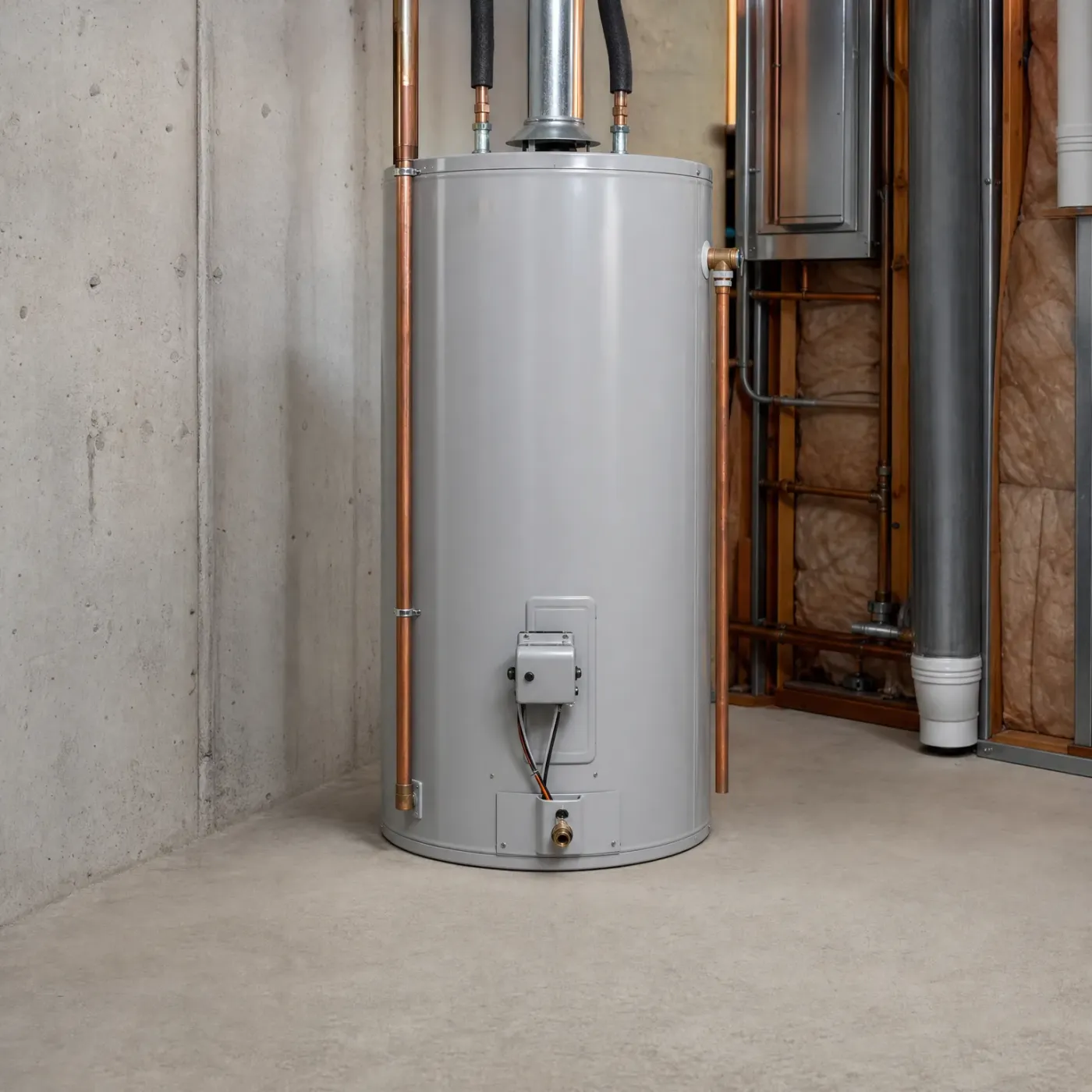
A gray cylindrical water heater stands in a basement corner against a concrete wall, with copper pipes, insulated flex lines, a metal flue, and insulated wall framing with ductwork to the right.

Smell Only at the Tap

If the rotten egg smell shows up only in hot water and the tank itself looks fine, the anode rod is reacting with bacteria inside. The tank keeps heating and working the way it should. A contractor can pull the rod, check the water, and often clear the smell without replacing anything.
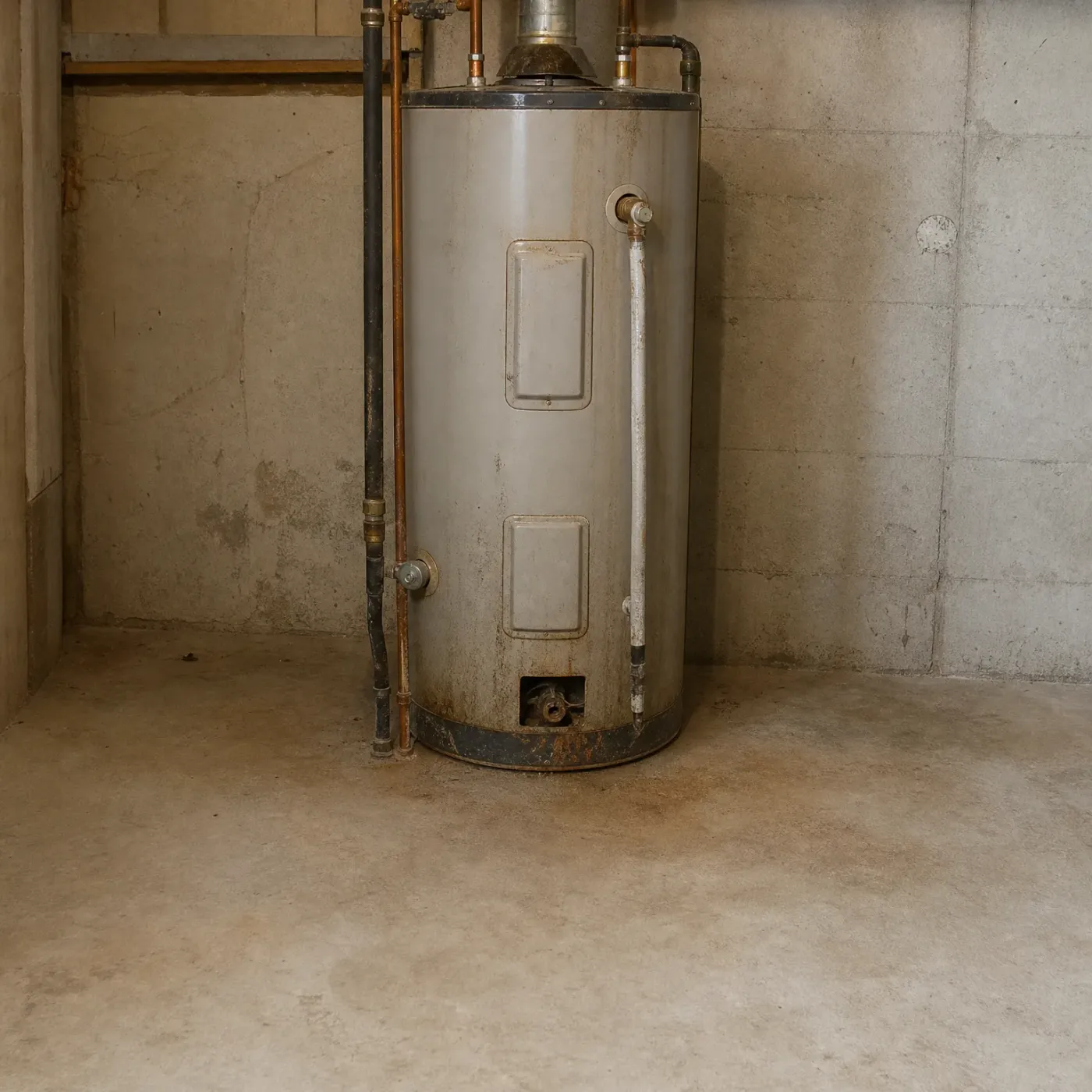

A rusting gas water heater with copper and steel pipes stands against a concrete block wall on a bare concrete floor.

Rust and Corrosion at the Tank

Rust along the base or body, especially with any dampness underneath, points past the anode rod to the tank itself breaking down. A gas water heater built like this can still smell of rotten eggs, but the fix isn't a part swap. A failing tank like this needs a look before it leaks.

A smiling man in a gray long-sleeved shirt stands in a kitchen looking to the side, with open shelves of dishes, a white mug on the counter, a potted plant, and a view through a doorway into a living room.
A smiling bearded man in a green sweater sits at a white marble kitchen island with a mug, potted plant and bowl of fruit, in a bright white interior with open shelving and an arched doorway.
A smiling man with dark curly hair and a beard, wearing a dark green knit sweater, stands at a white marble kitchen counter with a dark blue mug, with open shelving, pendant lights and a houseplant behind him.
A smiling man in a green ribbed sweater stands behind a wooden table holding a ceramic mug of coffee in a kitchen with white subway tile, shelves of potted plants, and a bowl of fruit.

Why Gas Tanks Get It More

A gas water heater cycles on and off all day to keep a full tank hot, and that steady heat gives bacteria in the water more chances to react with the anode rod. An electric tank heating the same volume of water doesn't run the burner as often, so the reaction has less time to build up. If your gas water heater sits unused for a stretch, summer travel or a cabin you only visit part of the year, the smell can show up stronger when you turn the tap back on after days of standing water.

What the Anode Rod Does

The anode rod is a length of magnesium or aluminum bolted into the top of the tank, and it corrodes on purpose so the steel tank doesn't have to. That sacrificial job is exactly what triggers the smell when certain bacteria are in your water supply. A contractor can swap the rod for one made of a different metal, aluminum or zinc instead of magnesium, which often stops the reaction without giving up the rod's protection. The tank itself usually isn't at fault. The rod is doing its job.

49.1% of homes statewide heat with gas

If your house is one of the roughly half in Alaska heating with gas, the tank is likely cycling on and off most of the day to keep up. That's more chances for the anode rod to react with the water and throw off the smell, not less.

ACS 2020-2024 5-year B25040

A closed laptop and a cream mug of coffee on a coaster sit on a dark wooden table, with a potted plant at left and a kitchen counter, tiled backsplash and shelf of ceramics in the background.

Living With It Until Someone Looks at It

You'll smell it first running a bath or filling a pot for dinner, and once you notice it you'll check for it every time. That's not a reason to put off looking into it, but it's also not usually a reason to shut off your water heater and go without hot water. Left alone, the smell doesn't get better on its own. The bacteria causing it stay in the tank, and the anode rod keeps reacting with them the same way every time your gas heater cycles on.

What it actually risks is the tank itself if the rod wears down with nothing done about it, and your patience with a bathroom that smells like sulfur every morning. Finding someone who works on water heaters in Alaska, calling around to see who can look at an anode rod, and explaining the same smell to three different people before you get someone scheduled, that's the part that wears people down more than the smell does. Send the form once and that search is off your plate.

A gray upholstered sofa with a textured cushion sits beside a dark round side table holding a vase of green foliage, with a table lamp and sheer-curtained window behind.
  1. Bacteria enter the tank through the water supply or during installation.

  2. Bacteria feed on the anode rod's magnesium or aluminum.

  3. That reaction produces hydrogen sulfide gas inside the tank.

  4. The gas dissolves into the hot water sitting in the tank.

A gray cylindrical gas water heater with copper and black pipes stands in the corner of a basement with concrete block walls and a bare concrete floor.
Before you get your water heater repair
A gray cylindrical water heater standing in a basement corner against a concrete wall, with copper and black pipes, a metal flue, and ductwork nearby, next to wood framing on the right.
After you get your water heater repair

Hand off the water heater problem

You could spend the next week on this yourself. Looking up anode rod types, calling around to find a plumber who works on water heaters and not just pipes, explaining the smell three or four different times to three or four different people, then sitting with quotes trying to guess which one actually knows gas tanks. Power costs enough up here that most homes lean on gas for hot water, and a tank that's cycling all day on a bad rod isn't going to fix itself while you figure out who to call. Winters here don't leave much patience for a water heater that's not working right, and summer dry spells don't make the smell any easier to live with either. Send the request once and that search is off your plate. No calling around, no repeating yourself, no sorting through quotes trying to tell a good one from a guess. Just the smell, and someone who actually knows what's causing it.

What the Smell Tells You

  • The rotten egg smell comes from hydrogen sulfide gas made when bacteria react with the anode rod in your tank.
  • Gas water heaters in Alaska cycle often to keep up with demand, which gives that reaction more chances to happen.
  • A smell only in hot water, with the tank otherwise working fine, usually points to the rod and not the tank itself.
  • A contractor can pull the rod, test the water, and replace the rod with one less likely to react.
  • The smell is a reason to get it looked at, not a reason to shut off your hot water in the meantime.
  • Once it's fixed, you're done checking the tap every time you run a bath or fill a pot.

The smell has one likely source: the anode rod in your tank reacting with bacteria in the water. That's true whether your water heater sits in Anchorage or out on the peninsula, and it's more likely to show up in a gas tank that's cycling on and off most of the day to keep up with a house full of people wanting hot water. None of that means the tank is failing. It means the rod is doing the job it was built to do, and doing it in a way that happens to produce gas you can smell at the tap.

What changes once someone actually looks at it is simple. The rod gets pulled, the water gets tested, and if the rod is the cause, it gets replaced with a type less likely to react the same way. That's the whole fix. What doesn't need to happen is you spending real time on it first: looking up which anode rod types exist, finding a plumber who handles water heaters specifically, explaining the smell over and over to whoever you call next. That part of it, the finding and explaining and comparing, is the part that goes away once you send the form.

Until then, keep using your hot water. The smell is unpleasant, not a sign to shut the tank down. It's a reason to get someone out to look at it, on your schedule, not an emergency.

At dusk, a dark board-and-batten house with a standing-seam metal roof and lit entry walkway of stone pavers, with two large outdoor heat pump units on a stone-walled pad at right and trees and hills in the background.

Water Heater Repair

Send one request and you're done looking

Step 1 of 3: Equipment
  • A ceramic vase holding leafy green branches and a shallow wooden bowl sit on a wooden window ledge beside a sunlit window, with a cream upholstered chair and knit throw in the foreground.
    • Describe your water heater job, and a local pro who handles it gets in touch.
    • Say what's going on with your water heater, and a pro who works on them reaches out.
  • Sunlit living room corner with a beige upholstered sofa, a round wooden side table holding a ceramic vase of olive branches, linen curtains at a window, a floor vent in the baseboard, and a woven jute rug on hardwood flooring.
    • Send the request and finding a pro stops being your problem.
    • After this form, you can stop searching for a water heater pro.
  • A wooden side table with a single drawer holds a shallow carved wood bowl and a white ceramic vase of green eucalyptus stems, beside a window and an upholstered chair draped with a cream knit throw.
    • Fill out one short form instead of calling around.
    • Explain the job once and skip repeating it on every call.
  • Corner of a house with horizontal siding, a white-framed window and stone veneer base, beside a covered entry with wooden steps, a potted plant, mulched beds of green shrubs and a flagstone path.
    • Your request goes to one pro, not a list of companies.
    • The pro who reaches out is licensed in Alaska.