Profile view of a bearded man wearing a dark green baseball cap and a dark gray T-shirt against a plain light background.

Why your water heater is slow to recover in Alaska

Step 1 of 3: Equipment

Why is my water heater taking so long to heat up again?

You run the tap and it's hot, then you run a bath or do dishes right after and you're waiting on cold water to warm back up. If this is new, or it's taking noticeably longer than it used to, something in the tank is working harder than it should to bring the water back up to temperature.

A failing heating element or a dirty burner is making the water heater work harder to recover

In a gas water heater, a dirty or misaligned burner won't put out the heat it used to, so it takes longer to bring a full tank back up to temperature. In an electric unit, a weak or partly failed heating element does the same thing. Sediment sitting at the bottom of the tank adds to it either way, since it sits between the burner or element and the water it's supposed to heat. With power this expensive here, a slow recovery costs more every time it happens. Left alone, the part doing the work usually fails the rest of the way, and then there's no hot water at all instead of just a wait for it.

A smiling man in a navy long-sleeve shirt sits at a wooden table in a kitchen and dining area, with a ceramic mug, a potted plant, and a sliding glass door behind him.
A smiling bearded man in a green henley shirt stands at a kitchen island with a gray mug, looking off to the side, with a dining area and shelves blurred behind him.
A smiling bearded man in a navy sweater sits at a white kitchen island with a ceramic mug, with open shelves, potted plants and a range hood behind him.
A smiling man in a dark olive long-sleeve shirt sits in a kitchen beside a counter with a dark mug, with a dining table, sideboard and hallway visible in the blurred background.

Running out of hot water faster than you used to?

You notice it most when the house is busy. Dishes after a shower, laundry on top of that, and the second or third draw comes out lukewarm instead of hot. The water heater might take longer to catch back up, or it might run out before it does. With gas heat, you may hear the burner cycling on more than it used to, or notice the pilot light looks weaker than before. A tank that worked fine all last winter and is suddenly slow now usually means something changed inside it, not that you're using more water than you think. Left alone, a slow recovery tends to get slower, and the burner working harder to keep up adds to the gas bill.

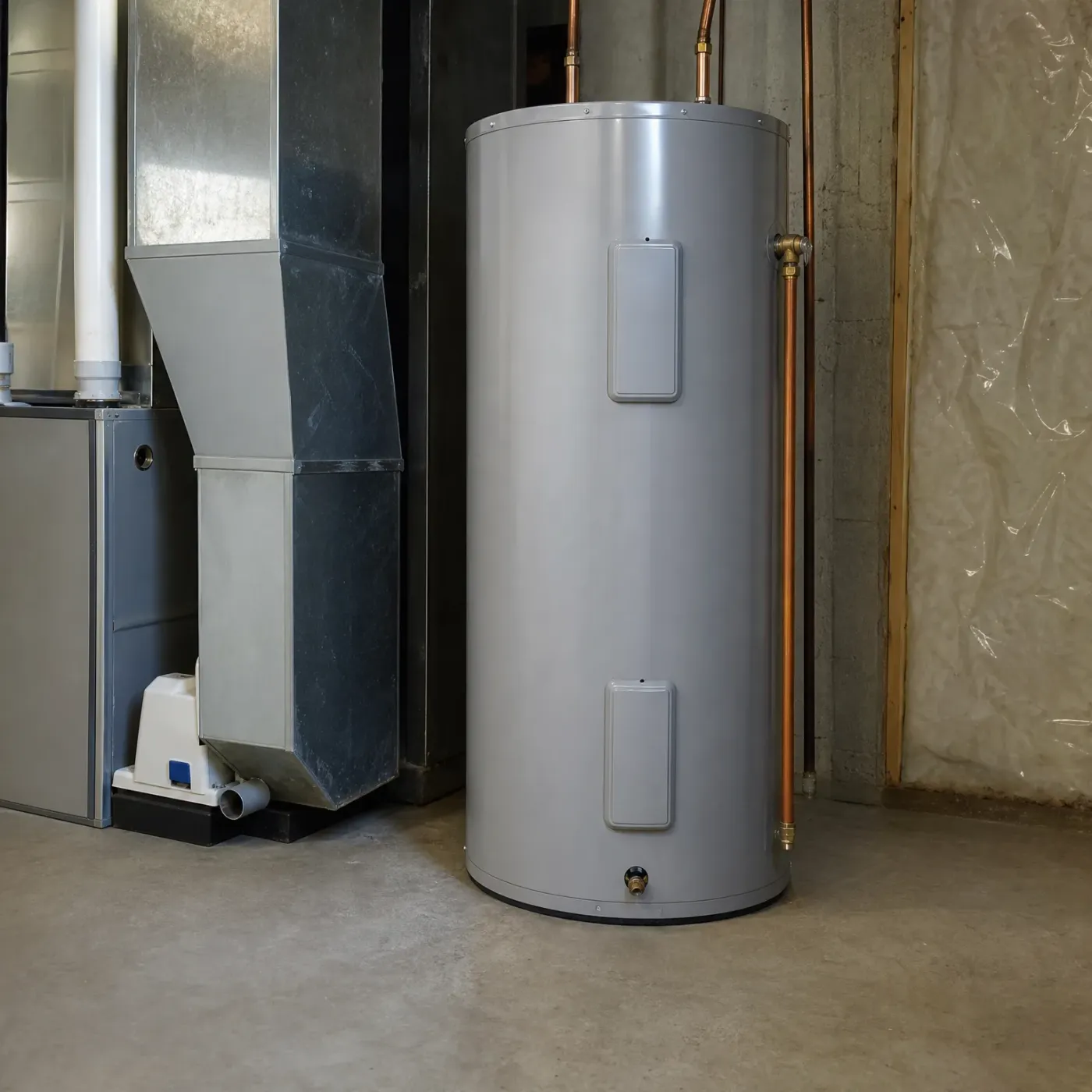
A gray cylindrical electric water heater with two access panels stands on a concrete floor in a basement, with copper pipes above and behind it, sheet-metal ductwork and a furnace to the left, and a plastic-covered insulated wall to the right.

Working the way it should

A gas burner lights, runs long enough to bring a full tank up to temperature, and shuts off. Copper lines carry hot water out to the house without a long wait between draws. Recovery time stays short and steady, draw after draw.

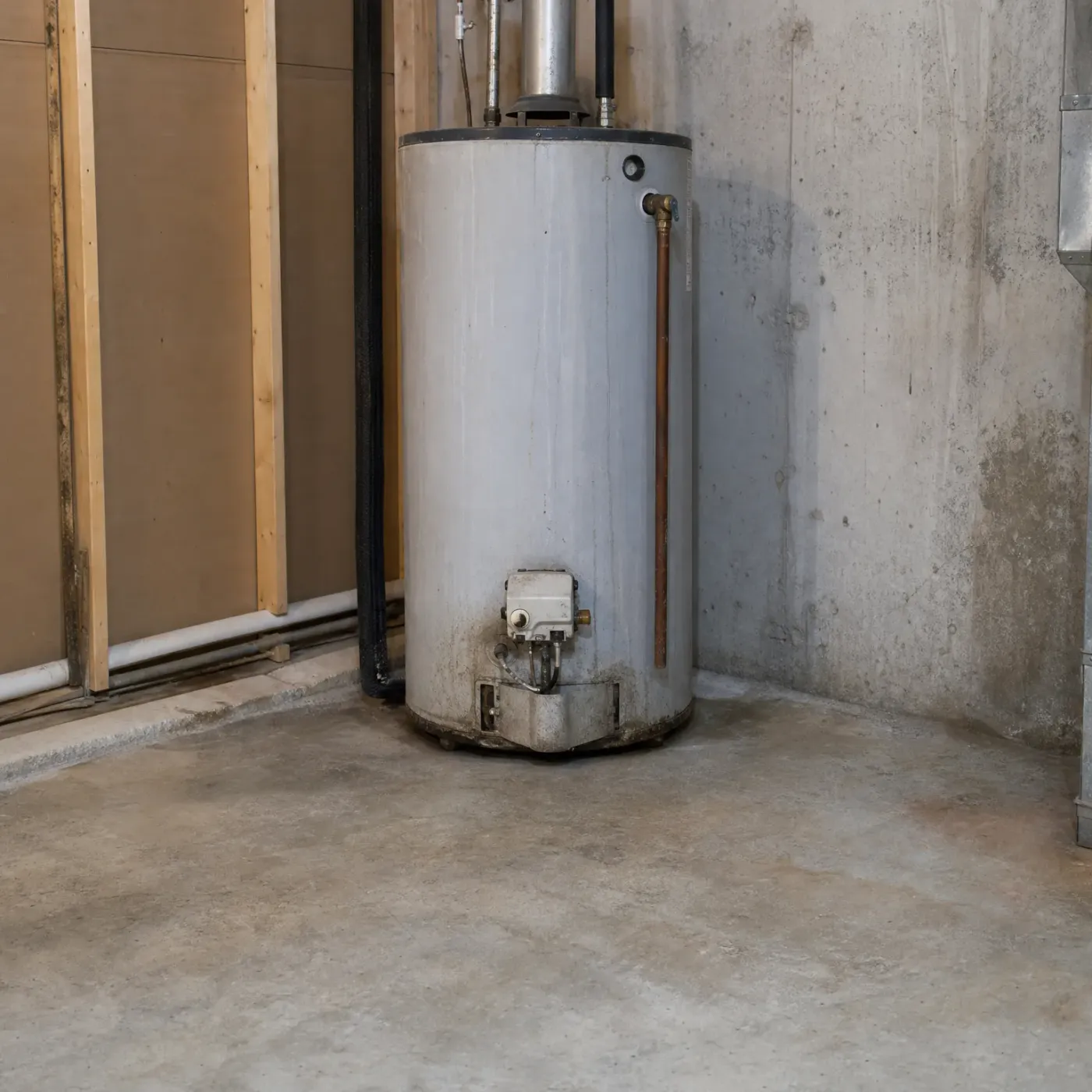
An older gas water heater with a copper pipe and flue stands on a concrete floor in a basement corner between a bare concrete wall and an unfinished wood-framed wall.

Worn out and slowing down

Rust and grime around the base and burner point to a unit that has been struggling for a while. A gas valve fouled with corrosion or a burner that can't hold a steady flame will take longer to heat the same tank than it used to.

Gas Burner or Electric Power Draw

Gas burner slow to recover

  • A dirty burner or clogged gas orifice cuts the flame down, so it takes longer to bring the tank back up to temperature between draws.
  • Sediment built up on the bottom of the tank sits between the burner and the water, so the burner has to work through that layer before the water actually heats.
  • A thermocouple or igniter that's starting to fail can cause the burner to cycle weak or short, leaving the tank underheated after each draw.
  • A tank sized too small for how the house uses hot water runs out fast no matter how well the burner itself is working.
  • Flue or venting partly blocked can rob the burner of the draft it needs to burn hot, slowing recovery without any other symptom showing up.

Power costs if it runs on electric

  • An electric water heater here leans harder on a power grid that's already among the most expensive in the country to run.
  • A lower electric element, or one that's gone out, leaves the upper element to do all the work, which stretches recovery time out.
  • Sediment buildup affects electric tanks the same way it does gas, insulating the water from the element and slowing the whole recovery.
  • Electric tanks recover slower than gas tanks by design, so a slow recovery on electric isn't automatically a sign something's wrong.
  • Running an electric water heater harder to make up for slow recovery shows up directly on a power bill that's already steep.
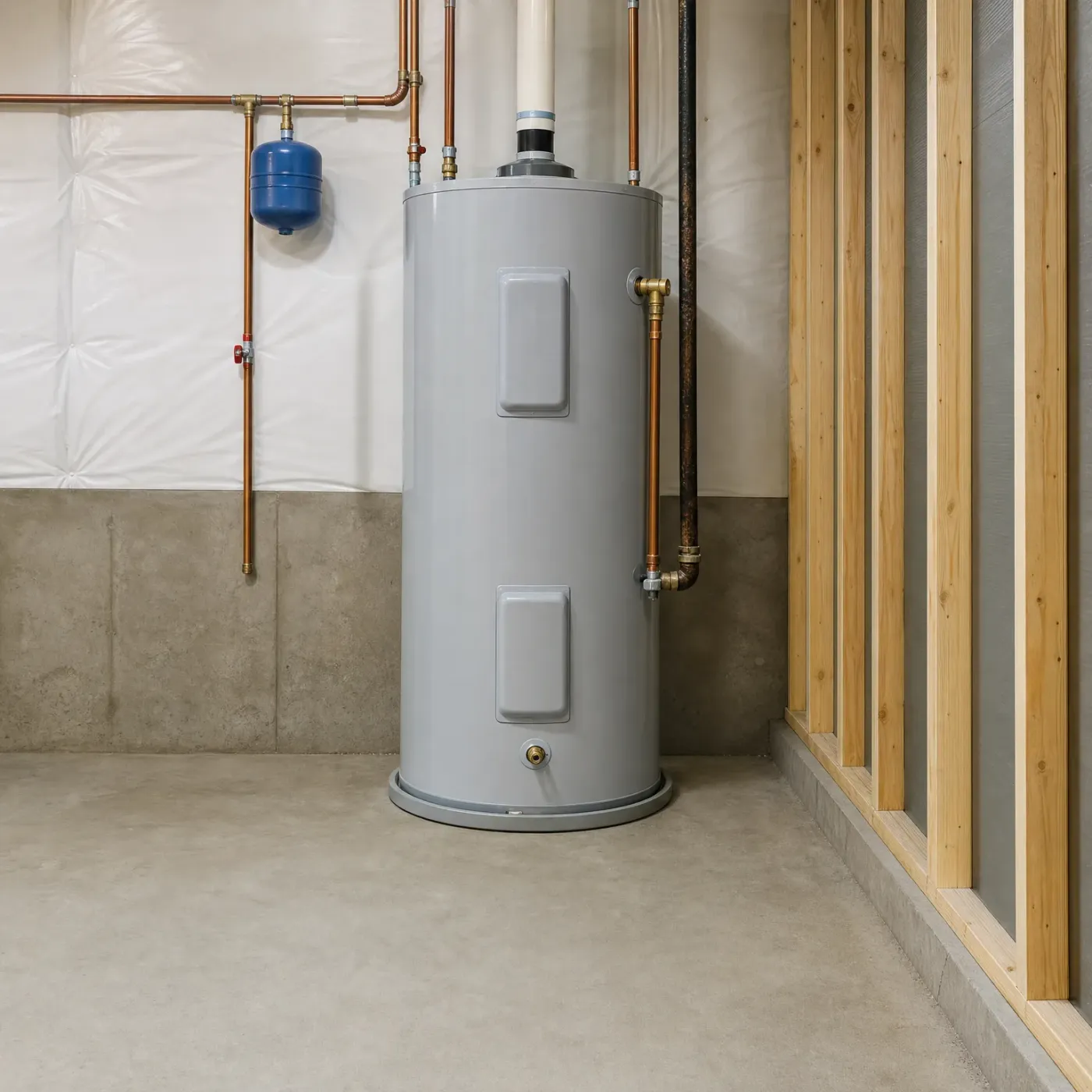
A gray cylindrical water heater stands on a concrete basement floor against a plastic-sheeted insulated wall, with copper supply pipes, a blue expansion tank, a black vertical pipe, and exposed wood wall framing at right.

Tank heating properly

The burner cycles on, brings the tank up to temperature, and shuts off again. Hot water comes out at the tap within a few seconds of turning it on, and it stays hot through a shower, a load of dishes, whatever comes next. No rust, no grime, no rotten egg smell from the drain valve.

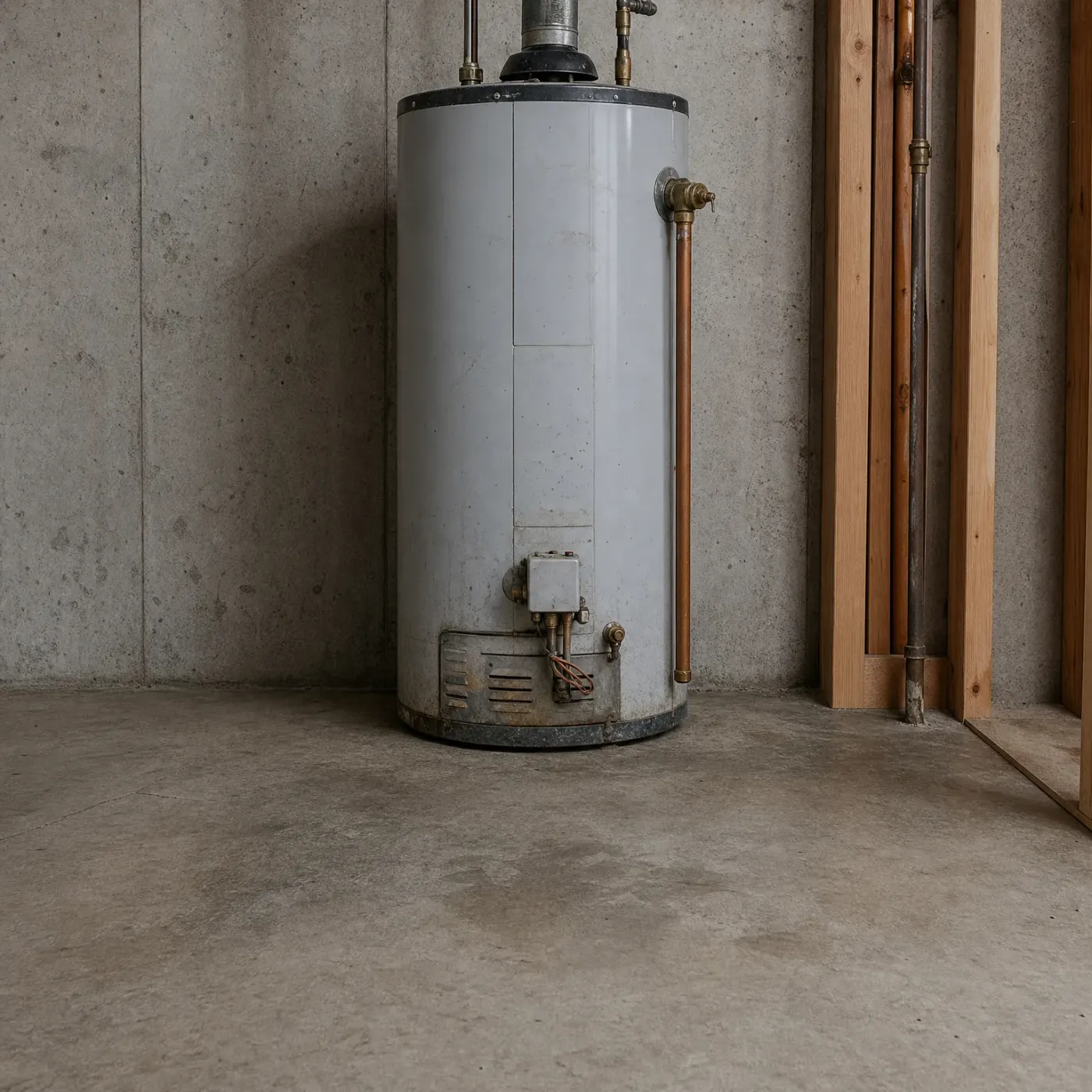
An older gray gas water heater with copper and brass piping stands on a concrete floor against a concrete wall, beside exposed wooden wall framing and vertical pipes.

Tank falling behind

Rust and grime have built up around the burner assembly, and the flame underneath isn't doing its job anymore. The tank heats slower, falls further behind with every draw, and the water coming out doesn't hold. Left alone, a tank in this shape usually gets worse, not better.

A man in a blue T-shirt sits on a light gray sofa, laughing while looking at an open laptop in the foreground, with a framed picture, lamp and potted plant behind him.
A bearded man in a blue and brown plaid flannel shirt stands indoors looking out a window at snow-covered trees, with a ceramic mug on the windowsill.
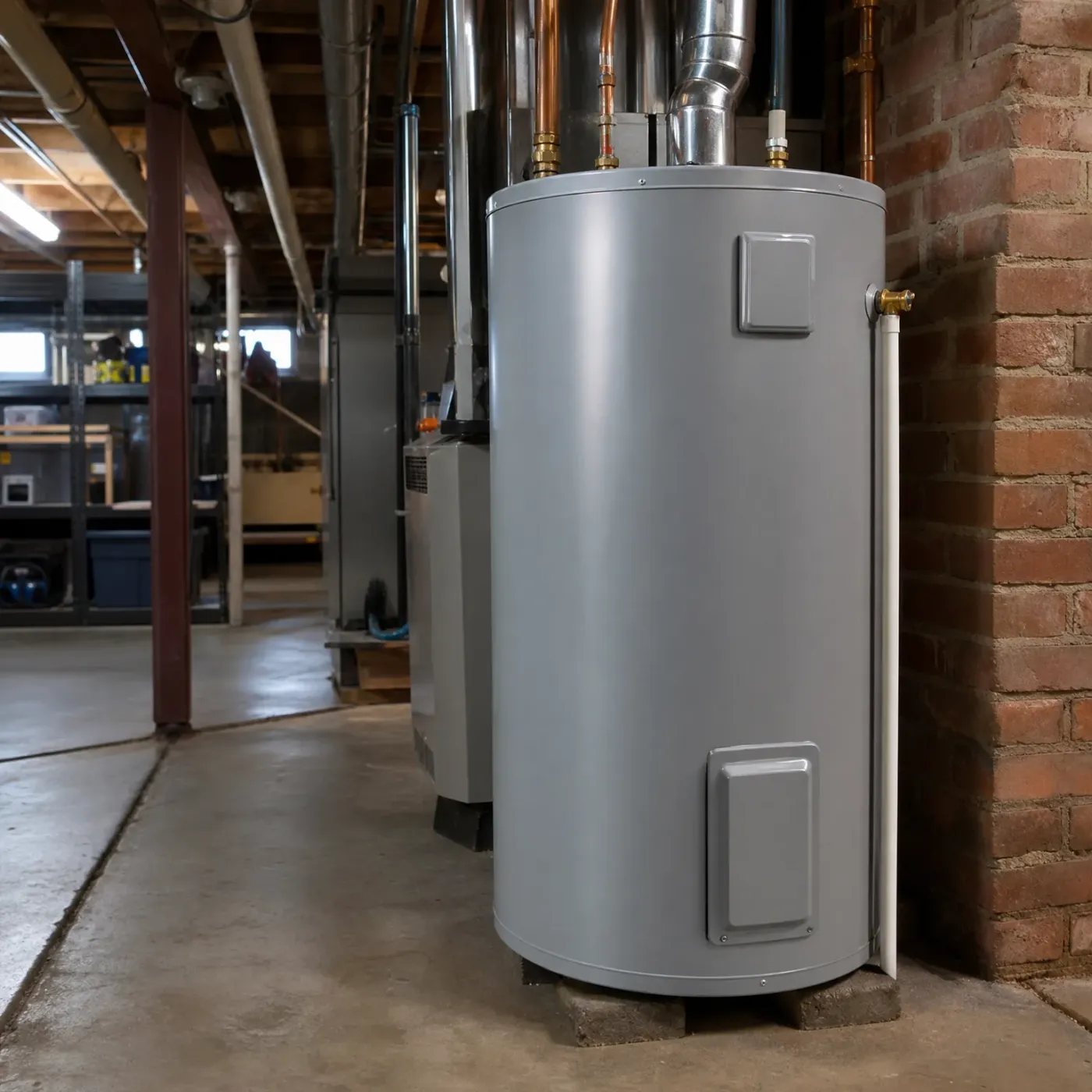
A gray cylindrical water heater with two access panels stands on concrete blocks beside a brick wall in a basement, with copper and metal pipes above and shelving visible in the background.

One request and it's handed off

Fill out one short form instead of calling around.

Send the request and finding a pro stops being your problem.

Hand off my repair

No fee to send it, and nothing to sign.

A closed silver laptop and a ceramic mug of dark coffee sit on a wooden table in front of two chair backs, with a kitchen counter, tiled backsplash, wooden cutting boards, a vase of greenery and a potted plant by a window behind.

What's actually happening inside the tank

Most gas water heaters in Alaska sit on a dip tube that feeds cold water down to the bottom of the tank, near the burner. The burner heats that bottom layer, and warmer water rises while the dip tube keeps feeding cold in underneath it. When the burner is clean and sediment hasn't built up, this cycle is quick. Once sediment coats the bottom of the tank, it sits between the flame and the water it's supposed to be heating, so the burner is working against a layer of insulation it was never built to push through.

That's the part that's easy to miss from the outside. You just see a burner that takes longer each week to catch up, and a bill from power that's already expensive here getting worse because the burner runs longer to do the same job. Instead of calling around Alaska for someone who'll actually look inside the tank, you can send one form and let a licensed contractor take it from there, including telling you plainly whether it's sediment, the burner, or something else.

A gray upholstered sofa with a matching cushion sits beside a potted plant and a wooden table holding a small green plant in a stone pot, near a curtained window.
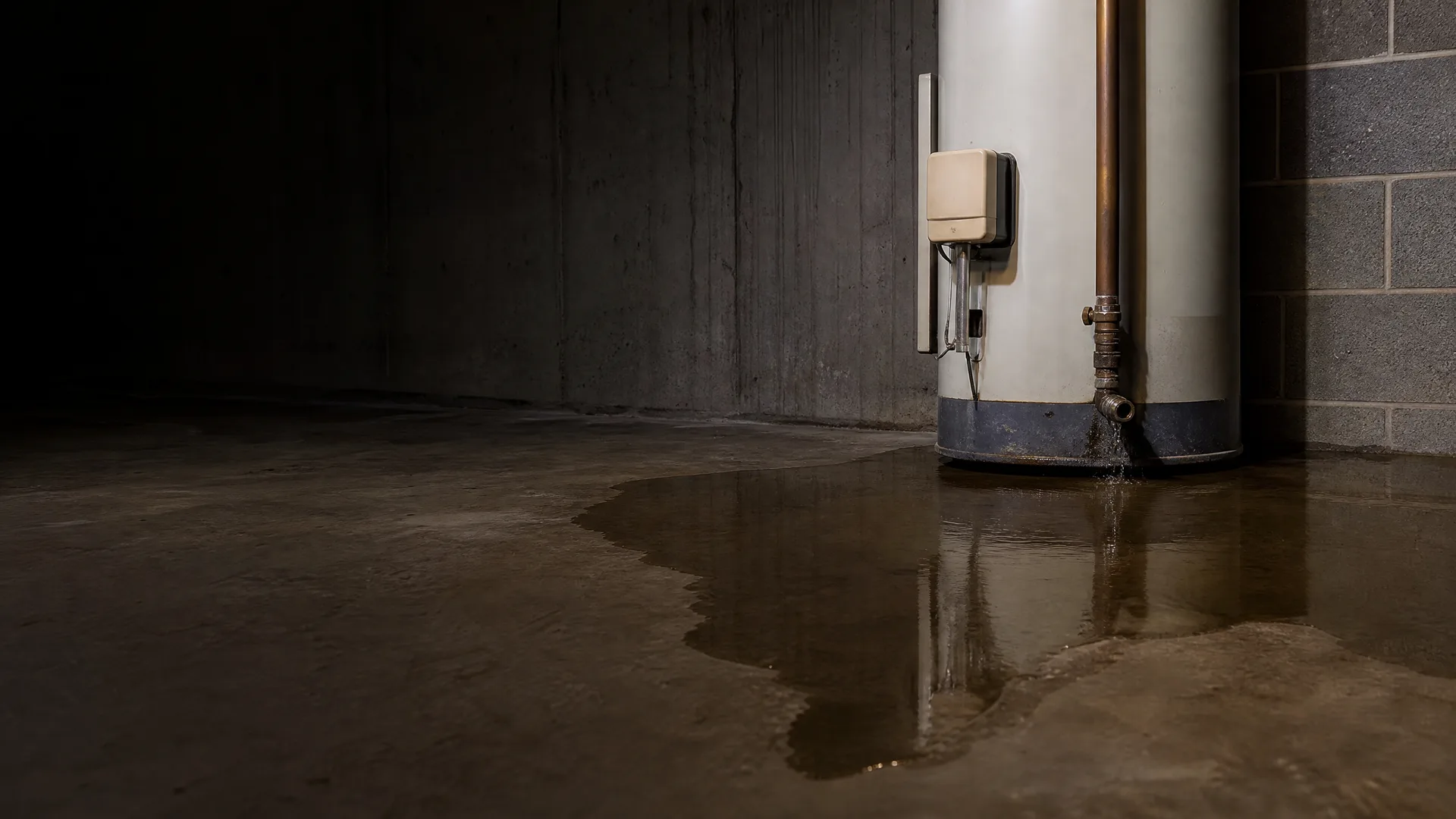
A water heater tank with copper piping and a drain valve stands against a concrete and block wall in a dim basement, with a large puddle of water spreading across the floor.

Saturday morning, and you're down in the basement to grab something out of the freezer before you start in on chores. The floor around the water heater is wet, a small pool spreading out from the base of the tank toward the drain. You crouch down to check and the metal near the bottom is damp to the touch, not just condensation. Outside it's dry and warm, the kind of Alaska summer day where you'd rather be anywhere but down here. You think back, the water's been slower to heat up the last couple weeks. You stand there a minute, listening for the burner, figuring out what you're looking at before you touch anything else.


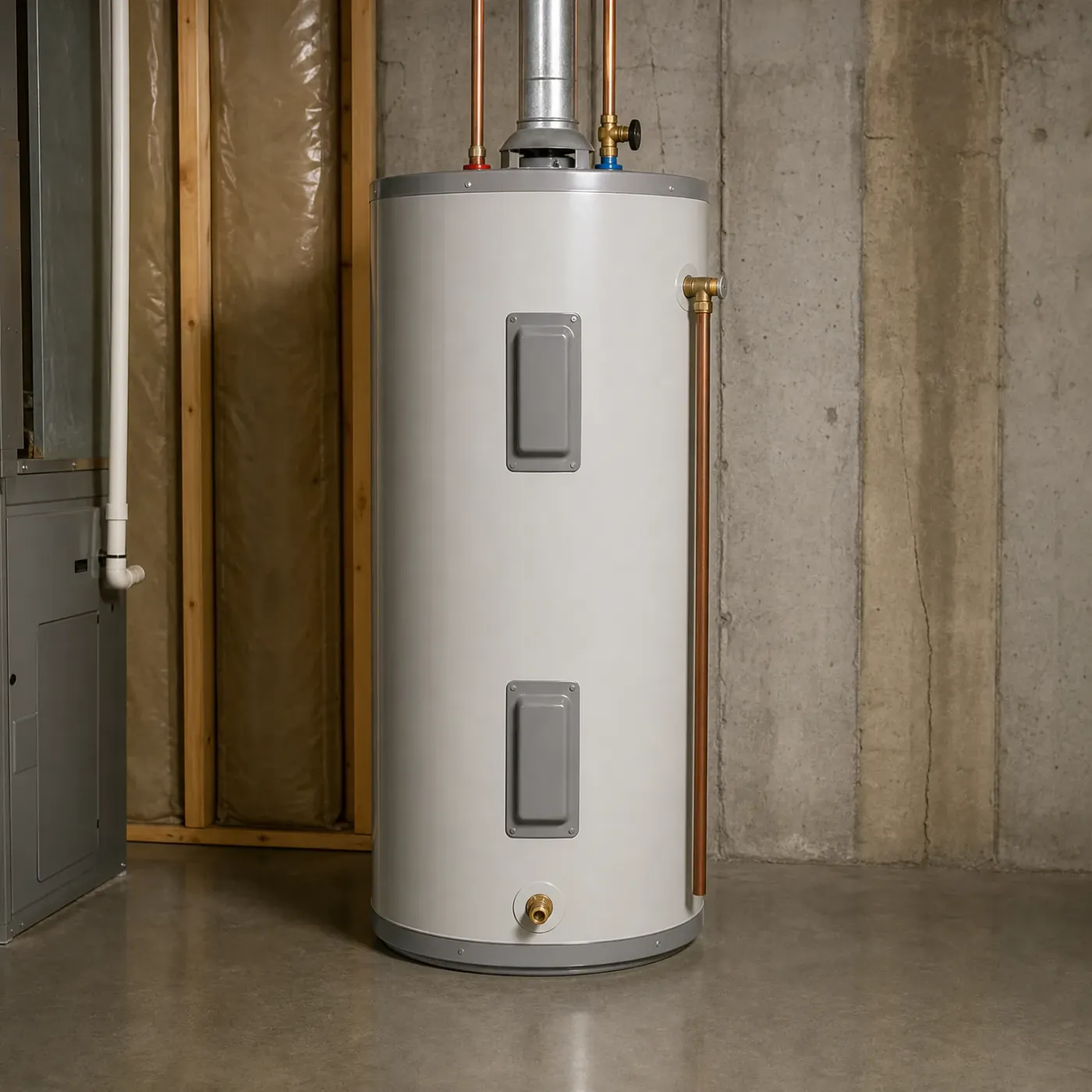
A white cylindrical water heater with two access panels, copper supply pipes and a metal flue, standing on a concrete floor against a concrete wall beside insulated wood framing and a gray electrical panel.
Supply and flue lines run clean and dry, and both access panels sit flush against a tank with no rust creeping up from the base.
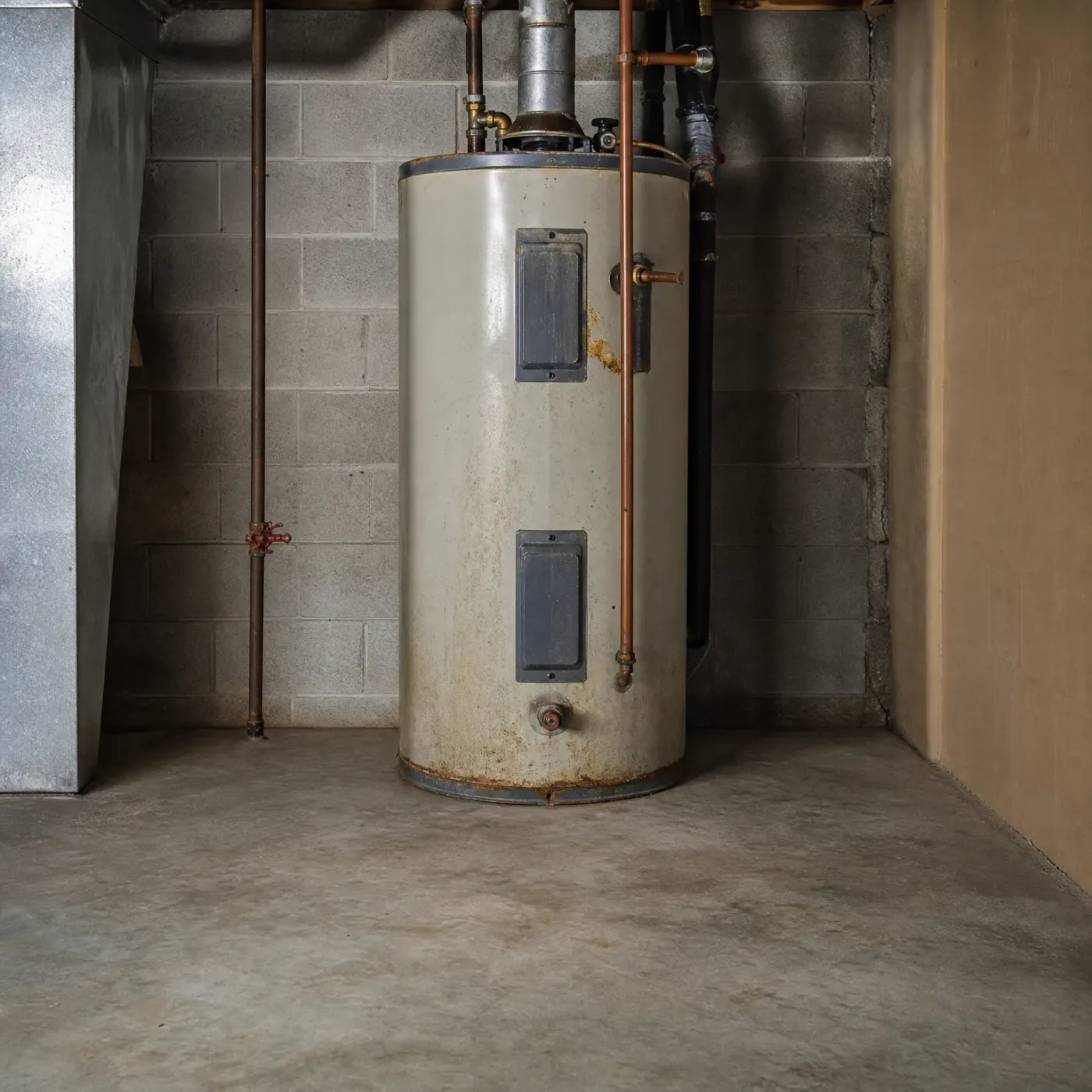
An aging cream-colored water heater with rust streaks and two access panels stands on a concrete floor against a concrete block basement wall, with copper and black pipes running up to the ceiling and a metal duct at left.
Rust has worked its way across the tank wall and down toward the floor, a sign the steel underneath is wearing through.
  1. Burner fires and heats the water sitting at the bottom of the tank.

  2. Sediment layer on the tank bottom blocks that heat from reaching the water.

  3. Burner keeps running longer, trying to push heat through the buildup.

  4. Warmed water rises slower than it should toward the outlet.

49.1% of homes statewide heat with gas

Close to half the homes in Alaska run a gas water heater, same as the one in your basement or closet. That burner needs a clean path to the tank bottom to heat on schedule. Sediment or a clogged orifice slows that down, and the burner runs longer each cycle trying to make up for it.

ACS 2020-2024 5-year B25040

A water heater that's slow to come back usually comes down to one of a few things: sediment sitting between the burner and the tank, a dirty burner or clogged orifice, or a thermocouple that's stopped reading the pilot right. None of those fix themselves, and the wait between showers and loads of laundry only gets longer while they sit. You don't have to spend your evening searching through listings, calling plumbers one by one to see who's free, explaining the same thing about your tank over and over, then sitting with a stack of quotes trying to figure out who's worth the call. Send the form once and that part of it is off your plate. What's left is the actual fix, the burner cleaned, the sediment flushed, the thermocouple replaced, whatever your tank needs to bring recovery time back to where it belongs.

A dark wood cabinet with a paneled door and a ceramic pot of green foliage on top stands in a beige-walled room with white baseboard, a window at left, hardwood floor, and a patterned area rug.
A dark wood glass-front cabinet holding folded towels, woven baskets and a ceramic vase stands in a bathroom corner beside a window, with a potted fern and stacked towels on top and a freestanding tub partly visible at left.
A woven basket holding a green cushion and a cream fringed knit throw sits on a wood floor in a room corner beside a window and a dark wooden cabinet.
Corner of a room with a dark wood cabinet topped by a round vase, a linen curtain at a window, white baseboard, oak plank flooring with sunlight patches, and a woven jute rug in the foreground.
A dark wood sideboard against a pale wall holds a shallow stone bowl and a round ceramic vase with leafy branches, with sunlight from a curtained window falling across the wall, wood floor and woven rug.

Done looking for a water heater pro

Explain the job once and skip repeating it on every call.

Send it today

Sending the form costs nothing.